

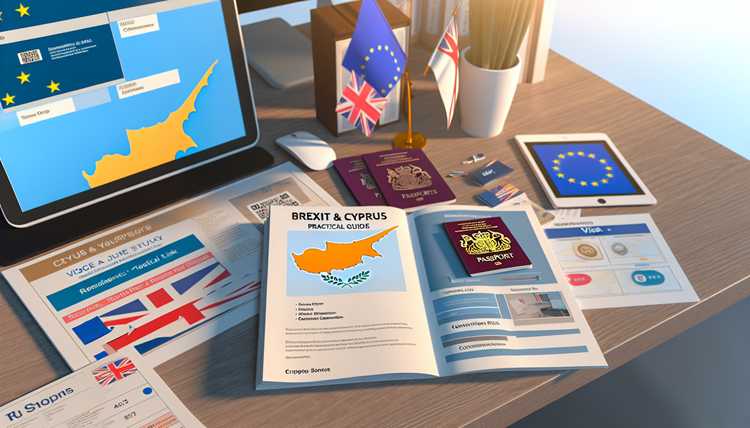
Brexit & Cyprus - Practical guide on residence, commerce, travel, political risk
Best first step: obtain Cypriot residency through a qualifying route and secure a real estate investment if you plan to live long-term. This provides local status, banking access, and a clearer path to work permits regardless of shifts in the UK market.
Residency options fall into two tracks. Property route requires a real estate investment of around €300,000 plus VAT and a clean background check; processing typically 6–9 months; you must maintain the investment for a minimum period and obtain health insurance and residency cards for all family members.
Alternative: Long-term residence via employment or self-employment by registering a Cyprus-registered company with local presence and revenue that supports the applicant; typical processing 3–6 months. Expect fees for the company setup (legal, notary, and registration) around €1,000–€3,000.
Travel: UK citizens can visit Cyprus visa-free for up to 90 days in any 180-day period. For longer stays or relocation, apply for a residency permit to live and work without separate authorization; holding Cypriot residence plus a UK passport ensures flexible entry to both markets.
Commerce: To run a business, open a Cyprus company; corporate tax is 15%, and the standard VAT rate is 19%. Plan for annual accounting, local payroll rules, and compliance with EU VAT rules for cross-border sales; set up a local bank account and obtain a business number for VAT registration if turnover hits the threshold.
Political risk: Cyprus participates in EU policy; watch for changes in tax rules, residency programs, and cross-border trade rules linked to Brexit developments; hedge risk with diversified holdings and liquidity buffers; stay updated through official sources and licensed advisers.
Residency · Travel – step-by-step actions: UK citizens securing Cypriot permits, healthcare access, border clearance post-Brexit
Apply for a residence permit for third-country nationals now and assemble a complete file. Your package should include a passport valid for at least six months beyond your intended stay, two recent passport photos, birth certificate, police clearance from the UK, evidence of accommodation in Cyprus (address proof or tenancy agreement), and documentation showing funds or income. Arrange translations into English or Greek and get any required apostilles. Obtain a medical report if requested, and carry proof of health coverage that will be valid in Cyprus.
Residency steps
- Visit the Civil Registry and Migration Department (in Nicosia or a district office) to confirm eligibility and choose the appropriate permit category for third-country nationals.
- Submit the application package online or in person, including copies of your documents, translations, and any required forms. Pay the processing fee and schedule biometrics if required.
- Attend the biometrics appointment and provide additional documents if requested. Expect processing to take roughly 2–6 months depending on volume and case specifics.
- Receive a decision; if approved, collect your residence card and register with the General Healthcare System (GeSY) as soon as you are eligible.
- Maintain status by renewing before expiry, reporting address changes, and notifying authorities of any change in employment or study status.
Healthcare access and border clearance
- Register with GeSY after you obtain your residence permit. If employed, your payroll contributes automatically; self-employed or non-employed residents enroll via GeSY guidelines and may pay monthly contributions directly.
- Access public healthcare services with your GeSY card or private insurer, depending on your coverage and status. Keep private insurance as a backup during transition until GeSY coverage is active.
- When traveling to Cyprus, carry your passport with at least six months validity, your permit card, proof of accommodation, and evidence of sufficient funds.
- For entry stays longer than 90 days, apply for an extension or change to a longer-term permit before the current stay expires; if you visit from the UK for short stays, you remain subject to visa-free rules where applicable.
Trade operations: how local importers & exporters manage customs, VAT, paperwork; payment collection with UK partners
See also: Doing Business in Curaçao.
Register for a Cyprus EORI and a Cyprus VAT number, and appoint a licensed customs broker who handles declarations, duties, and post-clearance checks.
Coordinate with UK suppliers to confirm valid EORI numbers on all shipments; keep a shared document with supplier EORI, HS codes, and incoterms; use English-language commercial invoices and packing lists to speed processing.
Prepare precise documentation: commercial invoice with itemized values, currency, country of origin, and HS codes; packing list; certificate of origin when required; standard transport docs like CMR for road and an airway bill or bill of lading for sea or air; declare goods on the Cyprus customs portal and attach electronic copies.
Documentation and customs clearance
Classify goods with correct HS codes to avoid delays; verify origin to apply any reliefs; pursue Authorized Economic Operator status if you run frequent UK–Cyprus traffic to speed checks and inspections at the border.
Maintain a digital clearance file that links shipment numbers, packing details, and tax status; keep records for six years and ensure data can be shared with customs on request; align declaration timing with transport windows to minimize stand-offs.
Payments with UK partners
Offer invoices in a stable currency or include a clear FX clause; pair terms with a bank-backed payment method: documentary letters of credit for high-value orders, documentary collections for medium risk, and open accounts only after a proven track record.
Open GBP and EUR bank accounts to receive payments in local currencies; negotiate symmetrical payment terms, and use forward contracts or FX options to cover major orders; require shipping documents (bill of lading, packing list) to accompany payments for smoother reconciliation.
Tourism & funding: practical tactics for operators to capture EU grants, restore visitor flows, convert demand into revenue
Identify a specific EU call on sustainable tourism and assemble a grant-ready package within two weeks: a 12-page business case, a 24-month budget, and three letters of support from local authorities and industry partners.
Pair the package with a data-driven plan that tracks baseline visitor nights, average spend, and seasonal gaps. Prepare quarterly targets for the first 24 months and show how EU funds will reduce risk and speed up recovery for Cyprus destinations that rely on seasonal flows.
Grant capture, partnerships and credible planning
Form a Destination Management Organization or expand an existing one to coordinate stakeholders: hotel groups, transport providers, museums, tour operators, and the municipal authority. Draft a governance charter with clear decision rights, procurement rules, and anti-fraud measures to meet EU compliance. Create a 3-part value proposition: preserve heritage, improve accessibility, and boost local jobs through a mix of infrastructure, marketing, and services that are ready for mass uptake.
Map the value chain to identify co-financing sources and in-kind contributions: public land improvements, private sector cash, and volunteer services. Align the grant narrative with three concrete outputs: upgraded visitor facilities, expanded off-season events, and a data-ready booking platform that local businesses can access for promotions.
Use the EU Funding & Tenders Portal to search with keywords such as tourism, sustainable tourism, cultural heritage, and destination management. Prepare a 6-line executive summary, a market analysis with seasonality charts, a risk matrix, and a sustainability plan with measurable indicators (water use, waste, accessibility).
Turning demand into revenue: packages, channels and governance
Design 2–3 revenue-ready packages that combine experiences with stays and transport. Examples: heritage trail with artisan workshops, coastal route with eco-transport, or an event circuit tied to local harvests. Price these packages to reflect peak and shoulder season demand, and build a simple online booking workflow that reduces friction by 15–20% based on prior operator data.
Invest in cross-border collaboration with nearby islands or Cyprus regions to widen the funnel of potential visitors. Joint marketing, shared itineraries, and combined transport passes can lift cross-regional spend and improve occupancy in slower months. Track outcomes with a dashboard showing bookings, average daily rate, length of stay, and net revenue per package.
Cap the plan with a 12-month sales calendar, monthly campaign metrics, and a post-project evaluation showing how EU funds supported visitor flows and job retention. Use the data to refine future grant applications and to scale successful packages across other destinations.
Political risk management: key precautions for investors, companies amid Cyprus–Turkey tensions, bilateral MOU second-year review
Establish a Cyprus–Turkey risk officer and a real-time risk dashboard within 24 hours to map exposure by country, sector, and counterparty. This role coordinates alerts on political shifts, maritime activity, and sanctions moves, turning them into concrete actions for procurement, treasury, and operations.
Compile an exposure map that covers suppliers, customers, and projects tied to Cyprus or Turkey, including energy blocks, logistics routes, and offshore activities. Limit reliance on a single supplier or route, and secure two viable alternatives for critical inputs and services.
Enhance screening and compliance by updating sanction checks and export controls on a weekly cadence, aligning with EU and local authorities. Score counterparty risk monthly and enforce a no-go policy for assignments with unresolved red flags, unless mitigations are in place.
Maintain liquidity buffers equal to three to six months of operating costs and reserve up to a portion of undrawn credit lines for cross-border disruptions. Use FX hedges for payments involving Cyprus or Turkey, selecting tenor and instrument types based on the expected risk horizon.
The second-year review of the bilateral MOU should verify milestones such as streamlined data exchange, joint risk reports, and agreed dispute procedures. Appoint a joint committee to publish a quarterly performance brief and to adjust action plans if targets lag. Track metrics like clearance times, documentation error rates, and the frequency of shared risk alerts.
Run quarterly scenario drills that model escalation in Cyprus–Turkey tensions affecting travel, shipping, or energy supply. Define trigger thresholds for escalation and pre-approved responses, including alternate routes, supplier substitutions, or project deferrals.
Maintain ongoing legal input from local counsel in Cyprus and Turkey to interpret sanctions, licensing rules, and regulatory changes in energy and maritime sectors. Review contracts for force majeure, change-of-law, and termination provisions to ensure alignment with the MOU framework.
Deliver monthly risk updates to the board and investors, and maintain a stakeholder map covering regulators, industry bodies, and financiers. Prepare concise briefs that support decision-making during the second-year review cycle and reflect evolving geopolitical risk.
Data signals for planning: import/export shares, tax receipts, banking indicators to assess sovereign risk, trade prospects, short-term outlook
Begin by calibrating procurement and pricing plans around import shares and volatility in trade flows. Build a dashboard that tracks partner-country shares for top inputs, updated quarterly from official trade data and customs releases; set triggers to revisit supplier contracts when a partner's share for a critical input crosses a chosen threshold or shifts by more than a few percentage points year over year.
Import/export shares: Identify the top five trading partners by product group and monitor concentration risk. Use HS 6-digit data to segment inputs like energy, metals, and electronics. If any partner accounts for a disproportionate slice of essential goods, diversify with alternative suppliers or stock buffers. Track changes monthly and price-adjustment clauses tied to partner risk metrics.
Tax receipts: Track VAT receipts, corporate income tax, personal income tax, and import duties quarterly. Compare actuals against budget and model-based forecasts. A sustained shortfall signals tighter fiscal space; respond with targeted expenditure controls or revenue measures and adjust debt service plans accordingly. Use tax buoyancy as a read-through for GDP momentum: if receipts grow faster than nominal GDP, it indicates stronger domestic demand and tax base resilience.
Banking indicators: Monitor private-sector credit growth, non-performing loan ratio, loan-loss provisions, and capital adequacy ratios of domestic banks. Watch liquidity metrics like LCR and net stable funding ratio (NSFR) for resilience against outflows. Record FX liabilities and hedge costs for external exposures; track interbank spreads and ECB policy signals to anticipate funding conditions for firms and sovereigns.
See also: What Fitch upgrade changes island’s sovereign rating, plus....
Public finance and sovereign risk signals: Observe CDS spreads and 5- to 10-year yield movements, plus sovereign debt service ratios. Follow rating actions and IMF or EU Commission updates. A rising risk premium or deteriorating debt service capacity calls for tighter liquidity planning, hedges on long-term debt, and contingency budgets for policy moves in relation to fiscal rules.
Trade prospects: Brexit and Cyprus-specific channels affect customs procedures, rules of origin, and service exports. Track trade-weighted export demand and import costs for key sectors like shipping, tourism-related services, and financial services. Monitor freight rates, port throughput, and logistics delays as leading indicators for supply-chain stress. Identify sectors with improving demand and push for faster market-entry steps or tariff advantage exploitation.
See also: Cyprus & Iraq Strengthen Economic Ties.
Short-term outlook: Combine indicators into a compact monthly dashboard and assign owners for each data line. If import shares shift toward riskier suppliers or if tax receipts underperform forecasts, intensify supplier diversification and tighten liquidity buffers. If banking strains emerge or sovereign risk widens, reduce exposure to high-liquidity-sensitive assets and pre-hedge refinancing needs. In practice, maintain a rolling plan for 60–90 days with weekly data checks and quarterly policy-review meetings.
Ready to set up your Cyprus company?
Our specialists guide you through the entire process — registration, tax setup, and bank account opening.
Request a consultation →