

Cyprus Levy Reform - Key Modifications, Global Impact on Firms and Individuals
Audit your Cyprus levy exposure today and create a two-week plan to align processes, disclosures, and governance. Begin with a precise inventory of affected income streams, update invoicing templates to reflect the new rules, and lock in a compliant reporting calendar that captures changes before the first filing window.
The reform tightens the levy base, extends application to additional categories, and updates documentation requirements. It introduces new reporting deadlines and clarifies transitional relief options, including eligibility criteria and the window for amendments after the change takes effect.
For global firms, Cyprus entities become a central hub for compliance, affecting transfer pricing, intercompany charges, and cost allocations. Expect tighter alignment with local tax rules and improved access to reliefs negotiated in double tax treaties, which reduces the risk of cross-border double taxation if processes are updated promptly.
Immediate steps for firms include mapping liable entities, revamping ERP and billing workflows, and training finance teams on the new classifications. Seek a readiness assessment from a local adviser, establish quarterly reviews, and document control changes to support audit trails.
Individuals should review how the reform touches investment income, rental receipts, and non-domiciled reliefs. Update declarations where required, consider the timing of disposition of assets, and prepare to submit any required disclosures within the first mandated reporting cycle.
Milestones to watch: regulatory guidance issuance, a phased implementation period, and the first post-change filings. Maintain ongoing monitoring so you can adjust quickly to any clarifications published by the tax authority.
Core Edits to Cyprus Levy Reform: Rates, Bases, Plus Thresholds for Companies and All Individuals
Compute your tax position now by applying the 15% corporate tax to chargeable profits and aligning your accounting with the revised base definitions. Revisit depreciation schedules, reclassify financing costs under the new limits, and validate loss carryforwards and group relief options to reflect the updated rules.
The personal income tax structure remains progressive, with five bands. The rates and thresholds are: 0% on income up to €19,500; 20% on income from €19,501 to €28,000; 28% on income from €28,001 to €36,300; 30% on income from €36,301 to €60,000; and 35% on income above €60,000. Apply these bands to compute marginal tax, ensuring that each portion of income falls into its appropriate bracket and that any applicable credits or reliefs are claimed in the correct tier.
Tax bases now reflect clarified definitions for both individuals and companies. For individuals, the base equals total income after allowable deductions such as social security contributions and approved personal reliefs; non-deductible fines or penalties remain outside the base. For companies, the base equals accounting profits adjusted for tax purposes, with non-deductible expenses disallowed and adjustments made for specific items like interest, capital allowances, and related-party transactions. The reform tightens the treatment of financing costs and strengthens transfer pricing compliance to ensure the base is measured consistently across entities.
Plus thresholds apply to reliefs and credits across both groups. Individuals can access credits and reliefs subject to defined income and family circumstances, while companies may encounter caps or phase-outs for incentives such as research and development, energy efficiency measures, and capital investments. Consult the latest official guidance to confirm exact eligibility, limits, and interaction with the main tax bands. Prepare scenario analyses to determine how each relief interacts with marginal tax rates and corporate tax on your specific structure.
Implementation steps: gather recent financials and tax-position documents, re-run calculations under the revised base rules, verify the treatment of interest and depreciation, and update forecasts and cash-flow planning. Coordinate with your tax advisor to file any amended returns if needed and to align future filings with the new thresholds and reliefs. Maintain clear documentation of all adjustments to support compliance and audit readiness.
Practical Impacts on Firms: Levy, VAT, Deductions, Plus Cross-Border Transactions Worldwide
Implement a centralized levy-VAT compliance dashboard by Q4 to reduce penalties and improve visibility.
Map all levy obligations and align with the VAT calendar; assign owners, set reminders, and review quarterly.
Clarify the levy scope, identify affected entities, and build a budget line for it.
For VAT, verify place-of-supply rules for cross-border services and goods; apply reverse charge for B2B services; register for OSS if you sell to other EU countries.
Deductions: keep detailed invoices and contracts; separate capex from operating costs; document staff costs, travel, training, and professional fees; claim R&D deductions if Cyprus offers them.
Cross-border transactions worldwide: register for VAT in key markets; use correct VAT treatment on imports and exports; maintain an internal matrix of customer location, tax regime, and filing deadlines.
OSS: for B2C digital services to EU customers, apply One-Stop Shop; use country-by-country reporting for third parties.
For imports, work with customs to classify goods with correct HS codes; pre-approve VAT and duties; reclaim VAT on eligible inputs.
Documentation: store contracts, invoices, and receipts for six years; run monthly reconciliations between ledger, VAT returns, and customs records.
Automation and training: implement a rules-based system to flag anomalies; train finance staff on Cyprus changes and cross-border rules; schedule annual audits.
Personal Levy Updates: What People Need to Know Plus How to Plan
Review your payroll now to apply the revised personal income tax bands and adjust withholdings to match the new schedule.
Key changes that affect individuals include the bands and rates below, applicable to residents for the current tax year:
- 0% on annual income up to €19,500
- 20% on income from €19,501 to €28,000
- 28% on income from €28,001 to €36,300
- 30% on income from €36,301 to €60,000
- 35% on income above €60,000
Illustrative example: A gross salary of €70,000 leads to tax around €14,634 before credits or reliefs (0% on first €19,500; 20% on €8,500; 28% on €8,300; 30% on €23,700; 35% on €10,000).
Next, assess how these changes affect different income types. Employment income, pensions, and rental income follow the same bands; dividend and interest income may have separate treatment under the defence contribution regime–check the latest guidance for those items and any reliefs.
How to plan in practice:
- Run a year-to-date tax reconciliation for yourself and your household; update employer withholdings to avoid end-year under-payments or refunds.
- Review non-cash benefits and pensions to see if they can be optimized within legal limits, such as increasing pension contributions to reduce taxable base.
- Schedule timing of income and deductible expenses; where permitted, defer non-essential income to a later period and accelerate deductible payments before year-end.
- Audit reliefs and credits you qualify for, including dependants and family allowances; gather required documentation now.
- For cross-border workers, confirm any treaty reliefs and report foreign income accurately to avoid penalties.
- Consult a Cyprus tax adviser for personal scenarios and to confirm figures with the Tax Department’s latest updates.
Deadlines and next steps: verify the filing window published by the Tax Department and ensure your records reflect the current rules. Keep copies of income certificates, pension statements, and receipts for deductible expenses for the coming filing season.
Expert Perspectives: What Revisions Specialists Say About Cyprus' Upcoming Adjustments Ahead
Review your Cyprus tax footprint now and map which reforms affect your entities, individuals, and cross-border structures; begin a practical action plan with deadlines for policy updates, documentation, and training.
What revisions specialists foresee
See also: Cyprus Ranks 3rd among EU economies in The Economist's....
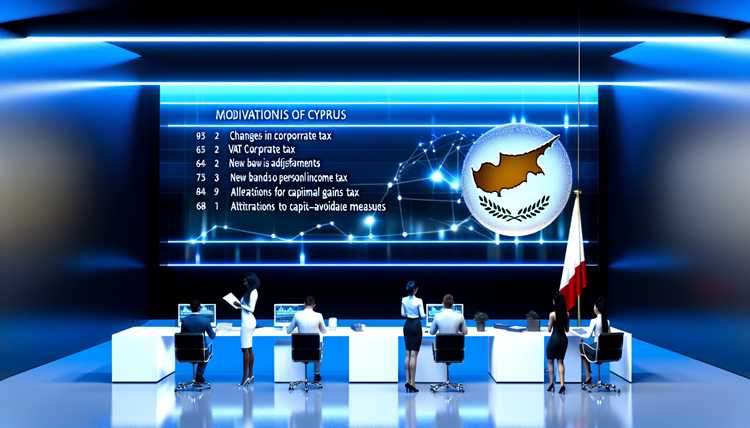
- Broadening of the tax base through tighter treatment of exemptions and targeted relief phasing, affecting both corporate profits and certain passive income streams.
- Closer alignment with BEPS standards, including enhanced transfer pricing documentation, master files, and local file requirements for Cypriot entities with related-party transactions.
- Increased disclosure around beneficial ownership and real-time reporting obligations, with penalties for late or incomplete filings.
- Changes to withholding obligations on cross-border payments and clearer rules for deemed distributions to shareholders; expect clearer thresholds for compliance.
- Continuity of Cyprus' standard corporate tax rate at 15%, while reforms aim to simplify compliance and reduce anti-avoidance friction.
Practical guidance for firms and individuals
- Audit current structures: identify entities that may be affected by broadened bases or new reporting obligations and map data sources for compliance dashboards.
- Strengthen transfer pricing: implement updated documentation, functional analysis, and contemporaneous arm's-length adjustments; ensure intercompany agreements reflect actual value flows.
- Plan capital and dividend strategies: evaluate timing of distributions, intra-group financing, and interest deductions under new rules to optimize tax outcomes within legal limits.
- Upgrade tax technology: centralize data collection, automate e-filing workflows, and implement controls for lodgement deadlines to minimize penalties.
- Assist individuals, including expatriates: review tax residency status, moving scenarios, and relief opportunities; prepare for potential changes to personal allowances and credits.
Government Measures: Scope, Timelines, Plus Implementation Tools for the Updates
See also: Invest Cyprus, CYFA MoU and Cypriot Business Ecosystem.
Adopt a phased rollout starting in Q3 2025, with mandatory compliance by Q2 2027, and deploy a centralized online portal for filings by Q1 2026. This sequence minimizes disruption for small firms while exposing larger entities to new reporting rules early on.
Scope of Measures
The package broadens the levy base, tightens related-party rules, and strengthens cross-border reporting. It adds new categories of income to be taxed and aligns penalties with risk levels. Transitional provisions ease entry for small businesses and freelancers, offering a documented transition window and clear opt-in options for voluntary disclosures.
Timelines and Implementation Tools
Rollout phases span from Q3 2025 to mid-2027, with the following milestones and tools to support compliance:
| Measure | Affected Parties | Scope Summary | Phase/Timeline | Tools and Systems |
|---|---|---|---|---|
| Base expansion for levy | Companies and partnerships | Inclusion of additional income streams and simplified cross-check rules | Phase 1: 2025 Q3–Q4; Phase 2: 2026 | Online filing portal; auto-validation; data prefill from VAT/records |
| Personal income levy adjustments | Employees, self-employed | Adjusted brackets; broader reporting on other income | Phase 1: 2026; Phase 2: 2027 | Digital declaration forms; prefill options; enhanced privacy controls |
| Withholding tax reform | Payers to residents/non-residents | Expanded obligations for cross-border payments; simplified reporting | Phase 1: 2025 Q4; Phase 2: 2026 | Automated reporting to Tax Department; validation dashboards |
| Enforcement and penalties | All taxpayers | Tiered penalties; clearer dispute routes | Ongoing 2025–2027 | AI-based anomaly detection; audit triggers; case management system |
| Compliance training and support | Tax agents, finance teams | Structured programs; helpline; webinars | Launch 2025 Q4; ongoing | Learning portal; live chat; FAQ repository |
Navigating Past Lessons Plus Future Directions: Risks, Opportunities, Plus Compliance Plans
See also: Cyprus Minds Platform Official Launch.
Implement a structured three‑phase compliance plan with clear ownership and quarterly reviews. Phase 1 focuses on mapping obligations, data sources, and affected entities; Phase 2 implements centralized data capture, automated reporting, and supplier onboarding checks; Phase 3 tests controls, conducts staff training, and establishes ongoing monitoring. Assign a single levy owner, define SLAs, and allocate a dedicated budget to support the rollout.
The Cyprus levy reform introduces modified rules that affect cross-border services and intercompany transactions. Key changes include expanded reporting for cross-border payments, new disclosure requirements for beneficial owners, tighter penalties for late or inaccurate filings, and enhanced enforcement tools. For multinational groups and individuals with Cyprus links, implications touch on service charges, royalties, interest, and other cross‑border fees charged by Cyprus entities. Firms should map each modification to specific workflows, systems, and roles to avoid gaps and misclassification.
The reforms create opportunities to strengthen data discipline and financial governance. Improved data quality supports more accurate pricing, better risk control for cross-border services, and stronger client due diligence. With automated reporting, firms can shorten close cycles, reduce manual rework, and provide clients with clearer, auditable records. This can translate into higher client trust, smoother audits, and faster onboarding of Cyprus‑linked entities.
To convert these gains into results, embed a formal compliance plan into governance structures. Integrate levy controls into ERP or tax‑software pipelines, implement role‑based access, and build automated alerts for deviations from set thresholds. Invest in staff training focused on the specific levy rules and ensure vendor contracts are aligned with reporting obligations. Establish a review cadence that coincides with the Cyprus tax year and major filing deadlines to keep momentum intact.
Data-Driven Risk Evaluation
Metrics to monitor include on‑time filing rate, average time to resolve levy queries, share of filings completed electronically, number of amendments requested by authorities, and average compliance cost per entity. Track changes in intercompany billing patterns, cross‑border service fees, and royalty charges by entity to identify potential misclassification risks. Set explicit targets for quarterly improvements in data completeness, accuracy, and timeliness, and review these targets in every governance meeting. Maintain a near‑real‑time dashboard for the levy program that highlights root causes of any delays or errors.
Actionable Compliance Blueprint
Steps to execute: appoint a levy owner with direct reporting to the board; create a centralized data repository for all Cyprus‑related transactions; configure automated rules in tax software to flag potential misclassifications and missing disclosures; implement controls for new disclosure obligations and penalties; roll out a training program for finance, treasury, and operations teams; establish a quarterly audit loop to test controls and confirm remediation actions are closed. Prioritize high‑risk entities first, then scale to the rest of the group, and align budgeting with the schedule of reforms to prevent resource shortages during peak filing windows.
Ready to set up your Cyprus company?
Our specialists guide you through the entire process — registration, tax setup, and bank account opening.
Request a consultation →