

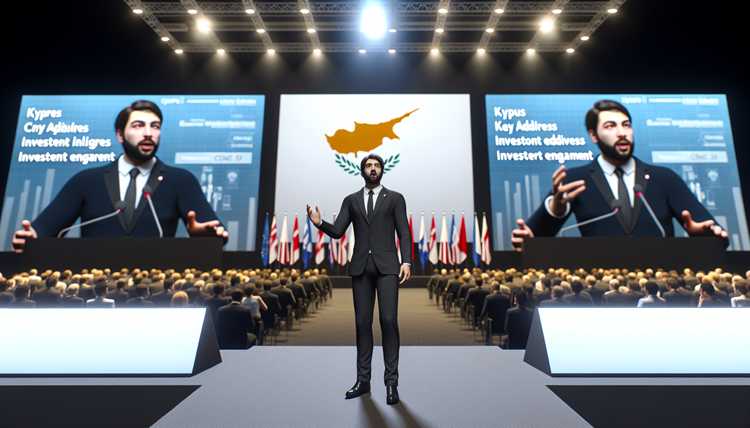
Nikos Christodoulides at the 3rd Capital Link Cyprus Forum - Key Addresses, Alliances, and Investor Engagement
Focus on the three key addresses Christodoulides delivered at the 3rd Capital Link Cyprus Forum to identify policy signals and investment priorities. These speeches crystallize the administration’s stance on financial reform, competitiveness, and regional cooperation, offering concrete references for investors and partners to align their plans with Cyprus' near-term agenda.
See also: Cyprus Economic Outlook: Key Trends and Opportunities for....
Alliances and partnerships emerged as a central theme. The forum highlighted new collaboration tracks with regional investment groups, international financial institutions, and private-sector consortia to streamline project pipelines, co-finance infrastructure, and accelerate regulatory approvals. Look for signed memoranda detailing joint ventures in energy, logistics, and technology-enabled services, with clear timelines for deliverables.
Investor engagement plan centers on structured, predictable updates and direct access. The speaker outlined a cadence of investor roundtables, sector-specific briefings, and pre-screened deal streams. For asset managers and funds, the recommended actions include submitting a 90-day engagement plan, requesting sector dialogues, and leveraging Cyprus's investment-licensing reforms to shorten onboarding for qualified buyers.
Practical takeaways for practitioners: monitor policy shifts on tax incentives, licensing reforms, and project pipelines through official channels and the forum's post-event notes. Establish a follow-up schedule with the relevant government agencies and industry bodies, and publish quarterly updates summarizing new alliances and upcoming opportunities.
Keynote Themes and Policy Signals at the 3rd Capital Link Cyprus Forum
See also: CUS News Report.
Recommendation: Establish a compact policy package with a 12-month delivery plan that signals ease of entry for capital, certainty of rules, and support for green projects.
- Regulatory clarity and speed: Publish a 12-month reform calendar, implement a 90-day licensing track for top-priority sectors, and launch a one-stop portal for investors that aggregates permits, licenses, and registrations.
- Capital-market openness and investor protection: Expand access to funding for small and medium enterprises, standardize due-diligence processes, and issue a quarterly market snapshot detailing listings, bond activity, and foreign investment inflows.
- Green finance and climate risk management: Align with EU taxonomy, create a formal green-finance roadmap, enable a green-bonds framework, and introduce ESG disclosure requirements for issuers on a phased timeline.
- Tax and incentives framework: Clarify IP and corporate taxation rules, publish an incentives catalog for strategic sectors, and guarantee transparent application steps with set timelines.
- Investor engagement and deal flow: Schedule monthly investor days, maintain a public investment pipeline in the form of project briefs, and provide clear eligibility criteria for incentives and subsidies.
- Governance and data transparency: Establish a reform dashboard with quarterly updates, form a standing fast-track committee for high-priority approvals, and require standardized reporting for listed entities, including sustainability metrics.
Award Highlights: Partners Recognized and Implications for Collaboration
See also: Cyprus Minds Platform Official Launch.
Formalize engagements by setting up a joint steering committee and signing MoUs with the six awardees within 30 days.
The awards span financial services, public development, academia, professional services, technology, and ESG, each tied to tangible outcomes: two cross-border pilots are active, three additional initiatives are planned, and a shared investment pipeline exceeds €120 million.
Fintech partner earning the Innovation in Collaboration award co-developed a cross-border onboarding and green-finance framework, supporting 5 pilot sites and a plan to reach 20 sites by year’s end.
Public development partner earned the Regulatory and Infrastructure Support award for enabling sandboxes, financing tools, and data infrastructure upgrades that unlock capacity for regional energy projects and transport logistics pilots.
Academic partner, a university research center, contributed to AI-enabled energy analytics and sustainable logistics, producing 2 white papers and a data-sharing pilot that informs policy and procurement decisions.
Professional services partner received the Governance and Risk Alignment award for streamlining investor readiness, sharing a common due-diligence model, and aligning compliance practices across 3 consortium members.
Technology partner, a cybersecurity and data analytics firm, delivered secure digital onboarding and privacy-preserving data exchange, enabling 4 pilot programs with a plan for wider regional rollout.
ESG partner earned the Climate and Sustainability advisory award for climate risk disclosure and supply-chain transparency, delivering baseline disclosures for 3 sectors and a unified reporting framework for partner disclosures.
Driving Collaboration Momentum

The recognition signals a clear path to joint funding, milestone-driven programs, and shared governance. It catalyzes faster decision-making, unlocks co-investment opportunities, and standardizes data-sharing protocols that support due diligence and market access for participants.
Next Steps for Stakeholders
Within 30 days, finalize MoUs, appoint liaison officers, and establish a quarterly joint review to track milestones and KPIs.
Publish a joint investor materials package and prepare a regional showcase for the next Capital Link Cyprus Forum to demonstrate progress and align on future pilots and funding rounds.
Sector Outlook: Economic Implications for Investors from that Cyprus Business Forum
Recommendation: Target renewables, logistics, and hospitality modernization with a staged capital plan and clear milestones for each asset class.
Renewables: Cyprus aims to add a substantial amount of solar and wind capacity in the coming years. Projects totaling several hundred megawatts are in the permitting and procurement phase, supported by EU funds and national incentives. Private investment in this pipeline ranges in the hundreds of millions over the next 2–3 years, with lines of credit and PPAs helping shorten payback periods for steady cash flows.
Logistics and port-related trade stand to benefit from port upgrades, new logistics zones, and better cross-border corridors. Recent volume trends show double-digit gains in cargo throughput and a growing pipeline of logistics assets near Limassol and Larnaca. Private capital expected in these assets over the next three years falls in the €0.5–0.8 billion range, driven by long-term leases and intermodal access.
Tourism modernization and hospitality tech adoption are speeding up capex on hotel refurbishments and new properties. Investments in 2024–2025 are projected in the €300–€500 million band, underpinned by incentives and EU programs. Occupancy and revenue metrics have recovered to levels close to 2019 in many submarkets, with steady improvements in guest spend and service integrations that support higher cash flow from asset-intensive assets.
Sector Signals and Data Points
Key momentum signs include a robust project pipeline in renewables, a rising tide of logistics park commitments, and hotel and resort refurbishments that align with traveler demand for safer, higher-quality experiences. The energy segment benefits from clearer licensing timelines and longer-term PPAs that stabilize returns. The logistics segment leverages port improvements and free zone expansions to shorten distribution cycles and reduce transit costs. The hospitality segment sees steady demand for premium rooms and curated experiences, supported by targeted marketing and regional tourism growth.
Action Plan for Investors
Partner with local developers, utilities, and banks to secure utility-scale PPAs and long-term leases.
Leverage EU funds and national incentives to reduce capex and accelerate permitting timelines, aligning project approvals with project milestones.
Choose sites with strong interconnections and access to ports, airports, and road networks to minimize logistics costs and improve asset turnover.
Structure holdings through Cyprus-based SPVs to simplify ownership, tax planning, and funding access, while maintaining robust governance and compliance standards.
Implement risk controls, including hedging for FX exposure, contingency budgets for permitting delays, and diversified offtake arrangements to protect cash flows across cycles.
Develop clear exit strategies, including potential sale to regional players or listing in a local or regional market, to realize value aligned with investor horizons.
Maritime Sector Commitments: Outcomes from the Cypriot Shipping Chamber Dinner
Adopt the Cypriot Maritime Digital Hub by Q4 2026 to standardize data exchange, deploy electronic bills of lading, and cut port clearance times for Cyprus-flagged ships by about 40%.
The Cypriot Shipping Chamber Dinner yielded concrete commitments: 60 senior executives from 28 firms participated; eight memoranda of understanding were signed; four cross-sector workstreams were launched focusing on Decarbonization, Digitalization, Crew Development, and Port Efficiency; a Cypriot Green Fund with €60 million was announced, mobilizing about €180 million in private capital; a Limassol Port shore-power pilot is planned for 2025; electronic documentation adoption is targeted at 80% of dry cargo calls by 2026; 40 new cadet scholarships will be created for Cypriot mariners; a 25% reduction in CO2 intensity by 2030 will be pursued in line with IMO guidelines.
Key Commitments and Metrics
Adoption targets include eB/L across 60% of dry cargo calls in 2025, rising to 80% in 2026; a shore power pilot at Limassol Port with two vessels by 2025; a digital hub with standardized data formats and API interfaces for three major port authorities by 2026; a goal for 25% of Cyprus-flagged vessels to install energy-efficient systems by 2029; 40 cadet scholarships and upskilling for 200 crew through new courses by 2026; a Green Fund of €60 million catalyzing about €180 million private leverage; eight partner MOUs to ensure coordinated financing and implementation by 2025.
Implementation Plan and Timeline
2025: launch shore-power pilot, begin digital hub development, initiate eB/L rollout on selected routes, start scholarship program. 2026: hub operational across Cyprus, 60–80% eB/L adoption, complete data standardization, add two new training tracks. 2027–2029: expand retrofits to more vessels, push toward 25% CO2 intensity reduction, extend shore power to additional ports. Governance remains with a steering committee led by the Cyprus Shipping Chamber, including port authorities, shipping lines, financial partners, and training institutions, meeting quarterly to monitor milestones and adjust budgets.
Investor Outreach: Translating Christodoulides’ Messages into Concrete Involvement Steps
Launch a 90-day investor outreach plan that translates Christodoulides’ messages into three concrete actions with clear owners and dates. Create a single messaging map linking policy goals to investor concerns: stability, growth, and efficiency. Publish this map within two weeks and align briefings, Q&A, and sector reports to it so every channel conveys the same signal.
Step 1 centers on message-to-action alignment. Produce a 2-page map within 14 days that ties each public statement to observable actions: project tenders, regulatory updates, and fiscal measures. Draft a 10-question Q&A and a 4-page sector brief to accompany it. Assign ownership to the Communications Director, the Policy Lead, and the Research Analyst, and publish all materials on the investor portal within the target window.
Step 2 focuses on the engagement calendar. Plan eight investor briefings, four sector days, and two long-form roadshows in markets such as London, New York, Frankfurt, and Singapore within 90 days. Each session runs 90 minutes, followed by a 30-minute Q&A. Provide live translation and a post-session digest that highlights three takeaways and five frequently asked questions.
Step 3 builds a toolkit and data transparency. Create 40-page sector briefs and monthly data updates in the data room. Include key performance indicators, risk notes, and practical case studies illustrating project progress. Guarantee a 48-hour response time to investor inquiries and a documented escalation path.
Step 4 establishes governance and a feedback loop. Form an Investor Council with 12 members from leading asset managers, family offices, and sovereign funds. Hold quarterly meetings, synthesize input into the messaging map, and publish a concise action list after each session.
| Step | Action | Owner | Timeline | Metric |
|---|---|---|---|---|
| Message-to-action alignment | Produce a 2-page mapping document, a 10-question Q&A, and a 4-page sector brief | Communications Director; Policy Lead; Research Analyst | 0–14 days | Materials published; portal updated |
| Engagement calendar | Schedule 8 briefings, 4 sector days, 2 roadshows; arrange translations | Events Lead | 15–90 days | Number of events; attendance share; international attendees |
| Toolkit and data room | Publish 40-page sector briefs; monthly data updates; KPI list; case studies | Research & Data; Communications | Ongoing; monthly updates | Pages published; update frequency; inquiry response time |
| Governance and feedback | Establish Investor Council; quarterly meetings; implement feedback into map | Strategy Office | 30–120 days | Council members; actions implemented |
| Measurement & reporting | Run dashboard; issue quarterly insights report | PMO | Ongoing | Dashboard adoption; insights applied |
Ready to set up your Cyprus company?
Our specialists guide you through the entire process — registration, tax setup, and bank account opening.
Request a consultation →