
Reframing Cyprus' Image - A Contemporary Cultural Renaissance, Final Reflections for the Arts
Invest in authentic local collaborations to shape Cyprus’ cultural narrative today. Three cross-disciplinary residencies in Nicosia, Limassol and Larnaca should run 18 months each, pairing painters, musicians, and craft-makers with skilled workers from nearby towns. Fund 12 public commissions annually to activate underused venues from galleries to old markets. The 2017 European Capital of Culture in Paphos demonstrates how a focused year can catalyze lasting partnerships across the island.
Make accessibility a priority by pairing venues with audience-friendly programs. Create a 12-month cycle that includes monthly free family workshops and partnerships with dozens of schools to bring contemporary art into classrooms. This approach expands public engagement while supporting local artists through predictable funding streams and small-scale commissions across neighborhoods.
Adopt hybrid formats that blend in-person events with curated online catalogs, virtual tours, and asynchronous discussions. This keeps Cypriot art visible year-round and invites diaspora participation. Build a data-informed calendar to track attendance, engagement, and the long-term impact on crafts, gastronomy, and hospitality sectors.
Policy framework: appoint a national arts council and establish a five-year plan with a €1.5–2 million annual grant program. Require at least one cross-city collaboration each year and foster partnerships with universities and vocational schools to train curators, educators, and technical staff. The example of Paphos 2017 shows how a targeted milestone can seed durable collaborations that outlast a single event.
Securing Funding and Residency Opportunities for Cypriot Creatives
Apply to at least two EU-funded programs this year and secure a residency by submitting tightly focused proposals and aligning with partner institutions.
Map funding sources into three streams and tailor each proposal to the audience. For each stream, create a one-page project brief, a budget outline, and a timeline. Keep a shared calendar of deadlines and required attachments to prevent missed opportunities.
- National grants and cultural schemes from the Cyprus Ministry of Education, Culture, Sports and Youth, and IKY (State Scholarships Foundation) that support mobility, production, and exhibitions. Regularly review official announcements, attend info sessions when offered, and prepare sample budgets in advance.
- EU-wide programs through Creative Europe and Erasmus+: these funds support cross-border collaboration, residencies, and dissemination. Download current call texts, assemble a consortium of at least two partner institutions, and craft a clear impact statement tied to audience development, capacity building, and sustainability.
- Private foundations and donor networks in Cyprus and the region. Build relationships with the Leventis Foundation, Onassis Foundation, and similar entities; submit concise, outcomes-focused proposals and seek co-funding or matching support where feasible.
See also: Choosing island locations with reliable Wi-Fi plus....
Residency opportunities to pursue
- Residency search platforms such as Res Artis and TransArtists help identify cycles that include stipends, housing, and project space. Create a 6-program shortlist with upcoming deadlines, and tailor materials to fit each call's specific focus (media work, performing arts, visual arts, community projects).
- Cypriot artists can target regional and international residencies that value cross-cultural exchange. Reach out to potential partner artists or institutions to secure letters of collaboration, which strengthen applications.
See also: Residency and visa routes for investors plus retirees.
Dossier and submission tips
- Portfolio: 10–15 high-resolution images, 2–3 short videos, a 1-page concept, a 2-page CV, and a 1-page budget and dissemination plan. Convert materials into accessible formats (PDFs for calls; links for online portals).
- Budget: present realistic costs across production, travel, accommodation, and insurance; include in-kind support (venue space, equipment, volunteers) to demonstrate viability.
- Letters of support: obtain 2–3 letters from curators or partner institutions; attach a brief note on each letter's relevance to the project.
- Partnerships: propose co-presentations or exhibitions at multiple venues or platforms to widen impact.
- Organization: maintain a single spreadsheet or document with call names, deadlines, required attachments, and status; set reminders at least two weeks before deadlines.
- Identify opportunities: list 4 national and 4 international calls that fit your practice.
- Prep core portfolio: assemble 12–15 images, 2 minutes of video, a concept page, and a CV.
- Draft proposals: write two concept notes tailored to each call and prepare budgets.
- Build collaborations: approach potential partners for letters of support.
- Polish materials: finalize dissemination plan and risk notes, refine visuals and texts.
- Submit: send at least two applications and apply to one residency cycle with a nearby deadline.
Keep the dossier current and revisit opportunities on a quarterly basis to align with evolving programs and new partnership openings.
Charting Cyprian Cultural Clusters: Exhibitions, Stages, and Live Spaces Today
Plan a three-city circuit: Nicosia, Limassol, Larnaca, and Paphos for balanced exposure to exhibitions, stages, and live spaces. In 2024–2025, Nicosia hosted roughly 16–18 contemporary art exhibitions across 6–8 venues and 2 museum programs. The performing sector across the capital and surrounding towns delivered about 120–160 productions annually, including 20–30 independent projects in off-site venues.
Key Clusters and Venues
| Cluster | Annual Exhibitions | Live Spaces | Focus | Recommended Actions |
|---|---|---|---|---|
| Nicosia | 14–18 | 6–8 venues + 2 museums | Contemporary visual arts and mixed media | Coordinate with major venues; connect with artist-run spaces; align with seasonal festivals |
| Limassol | 8–12 | 4–6 venues | Performance-driven shows and contemporary installation | Leverage old port venues; schedule cross-arts nights; invite international curators |
| Larnaca & Paphos | 7–9 | 3–4 venues | Performances, site-specific works, and heritage-linked programming | Partner with local theatres and outdoor stages; boost pop-up galleries |
Tip for planners: pair gallery openings with short talks, and schedule parallel performances to minimize crowd conflicts. Use city calendars published by art centers and theatre groups to avoid clashing with major events.
Practical Engagement Pathways
Creators and managers should build cross-city collaborations. Propose two-residence programs that pair Limassol studios with Nicosia galleries, and allocate one month per cycle in Larnaca spaces for experiments with audience participation. Involve university programs and local schools by offering free matinee shows and post-performance chats to grow the audience base.
Forecast and budget: for a regional circuit, plan 18–24 artist talks, 12–16 workshops, and 8–12 public tours annually. Secure shared transportation and accommodation stipends to support touring artists and ensure representation from Greek Cypriot, Turkish Cypriot, and international creators to reflect the diverse audience.
Safeguarding Legacy via Adaptive Reuse: Schedules plus Local Involvement
Adopt a two-year adaptive reuse plan anchored in three pilot sites, with a dedicated project director and a cross-department steering committee that meets monthly. Identify the sites in Nicosia's old town, Limassol's warehouse district, and Paphos's medieval quarter, and attach a single master brief to guide design, permitting, and opening steps. The plan uses fixed milestones and enabling gates at 6, 12, and 18 months to approve concept designs, secure permits, and begin occupancy in stage-ready form.
Develop a detailed schedule with clear tasks and responsibilities: site surveys within 6 weeks; design briefs by month 2; permit readiness by month 4; construction windows from month 5 to 11; fit-out by month 13; soft launch by month 15; full public access by month 24. Link each gate to a decision on whether to proceed, modify, or pause operations.
Pilot budget ranges 2.2-2.8 million EUR. Financing split: about 60% from EU and national grants, 25% from municipal funds and private sponsors, 15% in-kind contributions. Maintain a 10% contingency to absorb heritage constraint delays and unexpected works.
Expected outcomes include 30-40 new jobs across the sites and a 15-20% rise in visitor numbers in the first year after opening. Implement procurement rules that award at least 30% of contracts to local small and medium-sized enterprises; offer 12 apprenticeship slots, and partner with technical schools for hands-on site training. Include a community benefits clause to ensure public access hours and cultural programming for residents.
Local Involvement
Form a 12-member Community Advisory Board representing residents, business owners, cultural groups, and schools. Hold monthly public sessions and six design workshops tied to each gate. Require that 30% of procurement go to local SMEs, with an annual review of supplier diversity. Build volunteer and internship pathways for youth and provide translation and accessibility support at all events.
Scheduling and Funding
Publish a quarterly progress report and an annual financial audit. Use a milestone-dependent payment plan with disbursements tied to completed design reviews, permit approvals, and verified works. Maintain a risk log updated after each gate and allocate a 10% contingency for heritage compliance delays. Maintain transparency by posting key metrics on a public platform and inviting feedback from community groups.
Support for Local Creatives: Micro-Grants, Artist Collectives, plus Platforms
See also: Island Investment Momentum.
Launch a pilot micro-grant round in Cyprus offering 600–1200 EUR per project, with a 10–14 day application window and a 14-day decision timeline to accelerate support for emerging creators.
Target individuals and small collectives; allow concept notes of 300–500 words, a simple budget with up to three items, and one sample outreach plan. Form a diverse advisory panel with 2–3 local artists, a curator, and a university representative to ensure a grounded perspective. Publish results and a concise rationale within 14 days of final decisions.
Micro-Grants Mechanics
Three cycles per year, each funding 8–12 projects; total annual allocation aims for 60,000–90,000 EUR to sustain a steady stream of opportunities. Define clear eligibility: individual artists and small collectives active in visual arts, performance, music, dance, film, and community art. Require at least one public-facing outcome–an exhibition, workshop, or public showing–within three months. Panel composition includes two practicing artists, one curator, and one NGO or cultural worker, with decisions released within 14 days after the meeting.
Track impact with simple metrics: number of artists supported, range of disciplines represented, geographic reach across Nicosia, Limassol, Larnaca, and Paphos, and follow-on collaborations or commissioned work resulting from the grant. Publish anonymized success stories and a short impact snapshot after each cycle to maintain momentum and transparency.
Collectives and Platforms in Cyprus
Support for artist collectives begins with seed funds for governance, shared space, and collaborative production. A typical package covers rent and equipment for up to four cohorts, with 6,000–10,000 EUR total per year, plus six months of mentorship on administration, budgeting, and grant-writing. Pair each collective with mentors from UCY, CUT, or cultural centers to help establish governance models and project pipelines. Host quarterly open studios to invite audiences, funders, and potential partners.
Develop a centralized portal that aggregates calls, deadlines, budgets, and evaluation criteria. Provide language options (Greek, Turkish, English), accessible design, and downloadable templates. Work with municipalities in major cities to disseminate calls and showcase funded works in public venues. Use social channels such as Instagram and Facebook, plus local arts newsletters, to raise visibility. Maintain a transparent record of panel makeup, scoring rationales, and published results, with a two-week window for appeals and a final announcement within two weeks of the panel.
Connecting Viewers: Community Initiatives, Learning, plus Inclusive Arts Experiences
Launch a Cyprus-wide Community Arts Pass (CAP) that grants free or subsidized entry to galleries, theaters, libraries, and workshops for residents below the income threshold. Issue 5,000 passes in year one through municipal offices, libraries, and schools, with QR validation at each venue to collect attendance data and prevent misuse.
Pair CAP with a year-round schedule of mobile pop-up programs in urban cores and rural villages. Each event offers Greek, Turkish, and English, and uses accessible venues with ramps, tactile guides, and quiet rooms. Target at least 40 pop-ups per quarter and 25 partner sites across three districts in the first 12 months.
In a six-month pilot across Limassol, Larnaca, and Nicosia, attendance rose by 42% among first-time visitors, while 65% of participants reported improved comfort engaging with arts institutions. Of these, 58% were under 18, and 33% came from communities with historically limited access.
Programs include captioned performances, live audio description for theater shows, sign-language interpretation for major events, and sensory-friendly hours. Venues receive accessibility audits; staff receive inclusive-service training. Materials come in Greek, Turkish, and English, with plain-language exhibition texts and multilingual program booklets.
Establish micro-learning tracks led by local artists and educators, including 60-minute studio demonstrations, 90-minute workshop sessions, and 2-hour co-creation labs. Partner with universities and cultural institutes to certify badges for participants completing tracks.
Community Partnerships and Accessible Scheduling
Form a coalition of 14 municipalities and 6 cultural centers; align calendars around school holidays, weekends, and after-work hours. Build a volunteer corps of 120 trained guides who provide language support and on-site assistance, supported by a straightforward scheduling and feedback app.
Learning Pathways and Evaluation
Define metrics: monthly attendance, repeat visits, language distribution, accessibility satisfaction, and participant retention after 3 and 6 months. Use a dashboard to track progress and publish quarterly summaries to funders and the public. Offer micro-credentials for workshops and open resources on an online portal in Greek, Turkish, and English.
Assessing Revival Momentum: Concrete Metrics for Cypriot Cultural Change
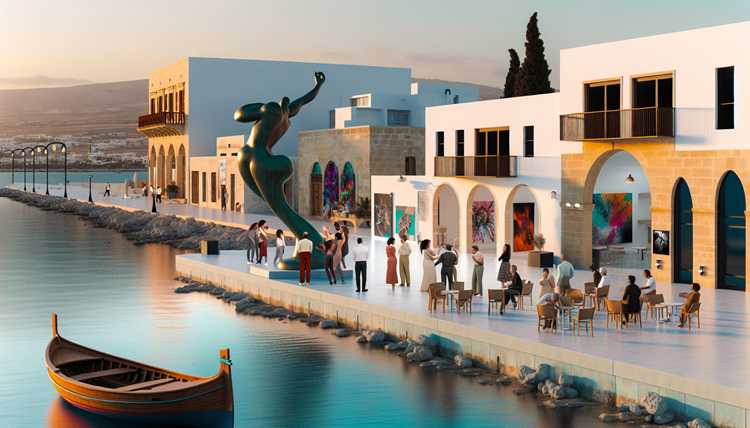
Launch a quarterly metrics dashboard tracking five core indicators to quantify revival momentum and guide investments. Establish baselines from the most recent 12 months and set targets for the next 12 months to create a transparent, action-oriented pulse across the sector.
Attendance and audience reach: Track total attendance at museums, galleries, theaters, and festivals across Cyprus. Use ticketing data, entry counters, turnout reports, and online view counts to produce a monthly total. Set a YoY growth target of 8–12% and monitor by region to identify underserved areas. Break out age groups to measure youth engagement and by venue type to compare size and appeal. Ensure data privacy and de-duplicate repeat attendees. This visibility helps prioritize outreach and resource allocation.
Funding leverage: Measure the ratio of private to public funding for cultural projects. Aim for a 1.5x private-to-public funding ratio within two years, with a minimum portion sourced from private sponsors, philanthropists, or corporate partners. Track matched funds, in-kind support, and co-financing across grants and commissions. Create a standard funding dashboard and require quarterly reporting from major partners. This balance strengthens program resilience.
Education and community engagement: Record school and community program participation, teacher training hours, and workshop attendance. Target a 20% increase in school visits and a 30% rise in workshop participation over two years. Collect participant feedback, measure learning outcomes where feasible, and map programs to local curricula. Align library and municipal programs to ensure consistency. These steps broaden baseline knowledge and support local culture agents.
Creative output and collaboration: Count commissioned works, premieres, co-productions, and artist residencies. Set a yearly increase target of 15% in new works and secure a majority share of projects through cross-institutional collaborations. Track revenue generated from new productions and the value of in-kind contributions. This signals momentum in creative ecosystems and strengthens cross-sector ties.
International visibility and mobility: Track inbound partnerships, joint programs, artist exchanges, festival collaborations, and visits by international delegations. Target a 25% rise in formal agreements and a 20% increase in joint festival programs over two years. Use MoUs, co-funded residencies, and travel grants as indicators, and publish quarterly progress to national and regional partners. These metrics translate local efforts into broader recognition.
Implementation and governance: Establish a cross-sector data task force with representatives from major museums, theaters, universities, and local authorities. Create a simple data dictionary, secure data-sharing agreements, and a central dashboard accessible to policymakers, funders, and cultural workers. Review progress each quarter, adjust targets annually, and publish an annual impact report highlighting wins and gaps. Build capacity with training on data collection and privacy to maintain trust and accuracy.
Ready to set up your Cyprus company?
Our specialists guide you through the entire process — registration, tax setup, and bank account opening.
Request a consultation →