

This Season - 200+ Cruise Ships alongside 300,000+ Passengers — Outline
Choose a mid-sized ship (roughly 1,500–3,000 guests) to minimize queues and maximize access to dining and lounges. With more than 200 ships in operation and over 300,000 travelers this season, availability shifts quickly. Prioritize itineraries that call at your favorite ports on specific days to avoid congestion.
Regional mix centers on the Caribbean, Mediterranean, and Northern Europe. Expect around 40–45% of itineraries in the Caribbean, about 25–30% in the Mediterranean, and the remainder split among Northern Europe, Alaska, and Asia. Peak windows cluster around school holidays, so plan excursions and dining reservations a few weeks in advance.
Assess onboard options early and look for ships with flexible dining, a robust kids program, and areas that suit adults seeking quiet time. Some vessels offer expansive water parks and top-tier spa packages; others favor intimate lounges and specialty evening shows. Compare options across ships to match your group’s pace.
Plan two to four shore days per week and book tenders or port calls with your guide or the ship’s excursions desk. Align sea days with rest, then reserve high-demand tours well ahead of others; this strategy minimizes wait times and maximizes time on shore.
Cabin choice matters. Choose a cabin type that balances price, view, and noise, leaning toward midship balconies for smoother seas. Review cancellation policies, onboard credits, and price drops that may unlock last-minute savings.
Safety and health details vary by ship and itinerary. Confirm vaccination or testing requirements, medical facilities aboard, and muster drill timing so your group stays prepared without surprises.
Fleet Distribution: Regions with ports hosting 200+ ships together 300,000+ passengers
Target the Caribbean and the Mediterranean: these regions host 200+ ship calls across multiple ports and attract well over 300,000 passengers each season.
Caribbean: A dense network of hubs concentrates traffic across Florida, the Bahamas, Mexico, and the eastern Caribbean. PortMiami and Port Everglades pair as the busiest gateways, delivering combined passenger totals in the several‑million range annually. Nassau and Freeport in the Bahamas, Cozumel and Progreso (Mexico), and San Juan in Puerto Rico contribute additional high‑volume days, yielding 200+ ship calls across the region and keeping passenger flows above the 1 million mark yearly. This distribution creates frequent turnarounds, short ground transfers, and abundant shore‑excursion options.
Recommendation for Caribbean planning: align port visits to reduce overlap, coordinate with national cruise calendars, invest in rapid immigration processes, and build multi‑port shore program packages that connect well with air hubs in Miami, Fort Lauderdale, and Tampa. Strengthen cruise line and supplier collaboration for weather‑wise itineraries during the peak winter season.
Mediterranean: Key gateways span Spain, Italy, France, Greece, and Turkey. Barcelona, Civitavecchia (Rome), and Venice‑area ports see heavy call volumes, while Athens (Piraeus), Palma de Mallorca, and Dubrovnik absorb substantial shares. Region-wide ship calls easily exceed 250 per season, with major hubs handling 1.5–2.5 million passengers collectively. The mix of Western and Eastern Med itineraries creates steady demand from spring to autumn and supports diverse shore offerings from city tours to island hops.
Recommendations for the Mediterranean: optimize berthing windows to ease congestion, expand rail and bus links to popular day trips, and invest in terminal capacity at high‑traffic hubs. Foster partnerships with local operators to deliver high‑value experiences, particularly in Barcelona, Rome, and Athens, where arrivals concentrate on a few days per week.
Asia-Pacific: The region pools Singapore, Shanghai, Busan, Yokohama, and other ports across East and Southeast Asia. Regional calls surpass 200 per season and passenger totals exceed 300k, driven by Singapore as a central hub and by multi‑port itineraries that link northeast Asia with Southeast destinations. The seasonality follows holiday patterns, creating tight windows for high-frequency calls.
Recommendations for Asia-Pacific: prioritize efficiency at the Singapore and Shanghai gateways, streamline visa and health checks for quick turnarounds, and develop cross-border rail and road connections to metropolitan centers. Encourage cruise lines to build longer itineraries that span multiple countries, maximizing turn times and port dwell times for shore programs.
Northern Europe: The Baltic and North Sea routes concentrate activity across Tilbury, Amsterdam, Rotterdam, Hamburg, Copenhagen, and Stockholm, with significant calls in Southampton and Zeebrugge. The cluster typically reaches 200+ ship calls and sustains 600k–1 million passengers per season, supported by robust cruise infrastructure, seasonal buffers, and diverse port offerings from historic cities to scenic coastal towns.
Recommendations for Northern Europe: push for synchronized port calls with air‑rail connections, expand late‑season itineraries to extend utilization, and enhance passenger processing lanes at key hubs to improve throughput during peak weeks.
Itinerary Framework: Primary routes, itineraries, featuring peak sailing windows
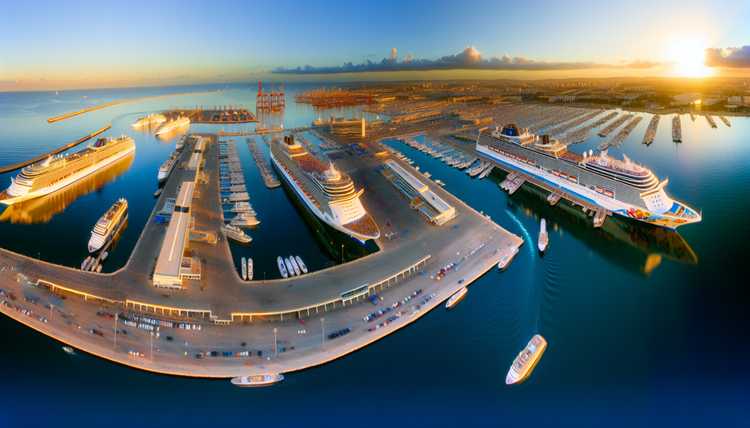
Begin with a 12–14 night Caribbean loop during the peak window (December–April) and attach a 7–10 night Mediterranean extension in late spring or early fall.
Build each plan around a core two‑route pattern that minimizes backtracking and maximizes port time. Choose ships in the 2,000–3,500 guest range for balanced speed and frequency of calls. For each route pair, set 2–4 sea days per week on the Caribbean or Mediterranean loops and 1–2 sea days on shorter legs. Use consistent embarkation hubs such as a southern hub in the Caribbean or a Western European port for the Med to reduce transfers and optimize on-arrival time.
Core routes by region
Caribbean: 12–14 nights with 3–4 ports; best windows Dec–Apr. Western Caribbean centers on Cozumel and Grand Cayman; Eastern Caribbean leans toward St. Thomas and San Juan. Mediterranean: Western Med 10–14 nights (Spain, France, Italy) Apr–Oct; Eastern Med 10–12 nights (Greece, Croatia, Turkey) Apr–Oct. Alaska: 9–12 nights in Inside Passage; embark Seattle or Vancouver; calls in Juneau, Ketchikan, Skagway; May–Sep has steadier weather. Northern Europe: 7–12 nights across the Baltic and British Isles; ports around Copenhagen, Stockholm, Helsinki, Dublin; Jun–Aug provide the widest call options. South Pacific: 9–14 nights across Australia and New Zealand with island calls (Fiji or Vanuatu in some itineraries); Nov–Mar offers the warmest seas for this region.
Two-region pairings (sample)
Caribbean core (12–14 nights) plus Med extension (7–10 nights) yields a 19–24 night plan. Origin hubs Miami/ Fort Lauderdale for the Caribbean and Barcelona or Rome for the Med; choose back-to-back bookings to simplify logistics and cabin choices. Alaska core (9–12 nights) from Seattle or Vancouver paired with a South Pacific cruise (9–12 nights) from Sydney or Auckland gives a cross-hemisphere option that fits long-haul travel into a single plan.
Safety Policies: Health protocols, cancellations, also compliance across the fleet global
See also: The Voyage.
See also: Identify Priorities for Global Leadership Needs Across Regions.
Implement pre-boarding checks: require a negative diagnostic test within 48 hours for all passengers aged 2+ and verified crew vaccination status where permitted, plus a health declaration collected at booking and re-checked at check-in. On arrival, temperature screening helps flag potential cases, while on board daily symptom checks and rapid tests for exposures keep activity safe.
Health protocols
Air and surfaces: Use HEPA filtration with 99.97% efficiency for recirculated air, and ensure at least 6 air changes per hour in all indoor areas; increase outside air during dining and peak activity; intensify cleaning of high-touch surfaces every 4 hours using EPA-registered products; maintain a visible cleaning log for staff and guests.
Mask and hygiene: Provide medical-grade masks on request; require indoor masking during periods of elevated risk; post multilingual reminders; install hand-sanitizer stations at entrances and elevator banks; train crew to model correct mask use.
Testing protocol on board: if a guest or crew member reports symptoms or exposure, perform a rapid test within 2 hours and isolate as needed, with appropriately mapped isolation spaces and medical care onboard or via telemedicine.
Cancellation policies and fleet-wide compliance
Cancellation terms: voyages cancelled by the operator include a full refund or no-penalty rebooking to a later date; credits stay valid for 18 months; voluntary changes may incur a small fee, with options for rescheduling up to 24 hours prior to sailing.
Compliance across the global fleet: every ship follows a single health-safety standard with annual crew training and a two-audit cycle by independent firms; a central data portal collects vaccination rates, test results, incident reports, and corrective actions; quarterly updates ensure ships align with evolving port and country rules and that findings are shared across the fleet for rapid improvement.
Booking and Budget: Strategies to find deals, compare fares, and lock in seats
Set price alerts on three sources–cruise line sites, major aggregator portals, and a trusted travel agency–and pull the trigger when a 10–15% dip shows up. Keep a hard ceiling per traveler and a preferred cabin type in mind, so you skip decisions that blow the budget. If the fare falls again within 72 hours, secure the booking with a small deposit that mirrors the line’s policy.
Know fare types and payment timelines. Most lines require a 10–25% deposit and final payment 60–90 days before sailing; refundable fares give more flexibility if plans shift, while nonrefundable rates carry price savings but cancel penalties.
Total cost matters: base fare plus taxes, port charges, and gratuities; add pre/post cruise nights, flights to port, and optional transfers. On a 7-night Caribbean itinerary, taxes and fees typically run $80–$180 per person, while port charges hover around $60–$150 per person; shorter trips are toward the lower end, longer itineraries higher.
Cabin choice impact: interior cabins typically start lowest; oceanview adds 15–30%; balcony often adds 20–60% over interior, depending on ship and season; suites add more.
Promotions that add value: onboard credits range from $50 to $300 per cabin, beverage packages or specialty dining credits may be included; look for bundles offering a combination of OBC and activities; promotions vary by itinerary and sailing date.
Hold options: many lines let you place a cabin on hold for 24–72 hours with no commitment; use this to compare options or wait for a sale without losing the price.
See also: Welcome International Students.
Lock in seats with a plan: book early when itineraries are released and then adjust for best price; loyalty programs can unlock perks, including additional OBC or stateroom upgrades.
Cancellation and risk: review the cancellation window for your fare class; if plans can change, choose a flexible fare or add a basic travel protection plan that covers cruise fare and nonrefundable components.
Ports with Shore Experiences: Must-do ports, excursions, plus local economic impact
Start with Cozumel, Mexico: pair a Palancar Reef snorkel in crystal-clear water with a visit to a family-run Mayan crafts cooperative to support local makers.
- Cozumel, Mexico
- Must-do experiences: Palancar Reef snorkeling, Chankanaab Park with beach access, stroll through San Miguel for street food and handicrafts.
- Excursions: Half-day Palancar Reef snorkel (3–4 h); Caleta El Cielo glass-bottom boat; Tequila and mezcal tasting with artisan market visit (4–5 h). Typical price range: $60–$120 per person for snorkel options; $90–180 for combined tours.
- Local economic impact: Onshore spending by cruise visitors largely goes to small operators, with about 60–85% flowing to family-owned shops and tour guides. The island region supports several thousand seasonal roles and a multi-million-dollar contribution each season.
- Dubrovnik, Croatia
- Must-do experiences: Old Town walking tour, City Walls ascent, sunset view from Mount Srđ; Lokrum Island day trip.
- Excursions: Sea-kayak around the walls (2–3 h); Game of Thrones filming locations tour (3–4 h); Mljet National Park day cruise (6–8 h). Price range: $70–$160 per person depending on inclusions.
- Local economic impact: Shore spend per passenger typically $70–$110; local guides and small businesses capture a major share of revenue, supporting several thousand tourism-related roles during peak season.
- Santorini, Greece
- Must-do experiences: Oia sunset vantage, Akrotiri archaeological site, caldera boat trip with hot springs.
- Excursions: Caldera cruise with volcanic stops (4–6 h); Santorini winery tour; 4x4 island exploration (all-day). Price range: $80–$180 per person.
- Local economic impact: Per-passenger onshore spend generally $80–$130; majority goes to family-run operators, with thousands of seasonal roles across taxis, guides, shops, and eateries.
- Nassau, Bahamas
- Must-do experiences: Cable Beach snorkeling, Nassau Straw Market stroll, John Watling's Distillery tour.
- Excursions: Rose Island snorkeling and beach day (4 h); 2-tank reef dive; Atlantis Aquaventure Day Pass (3–6 h). Price range: $60–$150 per person, depending on inclusions.
- Local economic impact: Cruise visitors drive significant onshore spending; typical per-passenger spend $70–$120; cruise-related activities support thousands of Bahamian jobs and revenue for local merchants and services.
Ready to set up your Cyprus company?
Our specialists guide you through the entire process — registration, tax setup, and bank account opening.
Request a consultation →