

Cyprus growth scope - planned properties, brands
Invest in a mixed-use project now: prioritize Limassol, Paphos, and Larnaca for coastal residential plus branded hospitality. This approach aligns investor appetite with government incentives to accelerate permits and public-private partnerships.
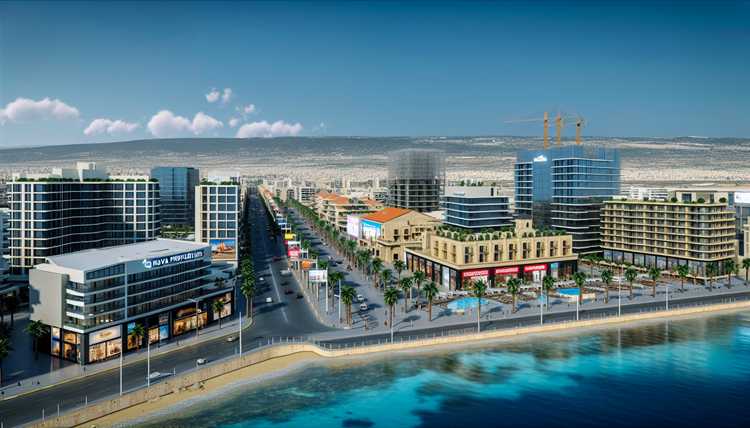
Current forecasts project roughly 3,000–3,500 new hotel rooms and 1,200–1,500 branded residences across the next three years, with about 60% concentrated in Limassol and Paphos. Developers who pair marina-front components with office or retail space capture stronger rents and faster exits.
Global brands are actively negotiating presence in Cyprus, pushing to open flagship hotels in city centers and launch branded residence options as part of larger mixed-use schemes. Expect LOIs from at least three major operators by end-2025, followed by formal commitments in 2026–27.
Recommendation for investors: secure land in coastal micro-areas with easy road access and fiber connectivity, secure pre-lease commitments from local operators, and build with modular platforms to shorten construction cycles. Use green building standards to qualify for EU funds and tax incentives.
Practical steps include starting with a central podium that combines retail and coworking spaces, then adding branded hotel wings, followed by upscale residences. Maintain tight budget controls and transparent revenue-sharing models with developers and authorities to ensure timely returns.
Funding structure: split between debt, equity; planned use of proceeds
Recommendation: Target a 60/40 debt-to-equity split for the project, keeping a DSCR of at least 1.5x once assets stabilize. Secure senior debt from local lenders at all-in costs of roughly 6.0–7.5% and reserve flexibility for potential mezzanine if pre-opening costs exceed liquid equity. Maintain covenants that safeguard liquidity: interest coverage above 2.0x and a debt service reserve equal to three months’ debt service.
Proposed capital structure
Capital mix aligns with local market benchmarks: 60% of project cost from senior debt, 40% from equity contributed by the project sponsors, brand partners, and affiliated funds. Prioritize fixed-rate facilities and ensure pre-approval for a staggered draw schedule to match construction milestones. Include a structured contingency line within the debt facility to cover unexpected costs without triggering covenant breaches.
Planned use of proceeds
- Construction and fit-out: 40%
- Land acquisition, permits, and regulatory costs: 15%
- Brand development, licensing, and initial marketing: 12%
- Pre-opening costs and initial staffing: 8%
- Working capital for first 12 months of operations: 12%
- Financing costs, advisory fees, and lender mechanics: 8%
- Contingency reserve: 5%
Market-entry criteria for the island: location selection; demand signals; occupancy targets
Choose sites within 15–25 minutes of Larnaca or Paphos international airports, with direct highway access to Limassol and Nicosia, and establish a 12–18 month timeline from due diligence to opening.
Location selection
Prioritize coastal blocks near established tourism clusters where utilities and permits move faster. Favor properties within 30 minutes of main beaches and attractions, with strong connections to the highway network and to primary source markets (UK, Greece, Germany, Israel). Validate zoning and building caps early; run a due diligence checklist covering water capacity, electricity connectors, waste management, and environmental constraints. Compare land costs and liquidity across municipalities; budget for road access and green-area improvements as needed. Engage local partners with proven permitting track records to shorten approvals.
Demand signals and occupancy targets
See also: Brexit & Cyprus.
Monitor flight schedules, airline capacity to Larnaca and Paphos, and seasonal occupancy trends to time launches. Track occupancy and ADR proxies from comparable properties in Limassol and Paphos; expect peak-season occupancy above 75% for luxury and 65–75% for mid-market by year 2, with shoulder-season performance at 40–50%. For serviced apartments, target 70–85% occupancy in peak months and maintain 55–65% in shoulder periods. Set annual occupancy goal around 65–75% for mixed-use concepts; build pricing and promotion plans to reach this band. Use a phased timeline with pre-launch marketing four to six quarters before opening; adjust based on guest mix shifts (longer stays from corporate and GCC markets versus short stays from leisure guests).
Strategic European growth plan: initial markets; fast-follow opportunities
Recommendation: Launch a 12-month pilot project in Greece, targeting branded coastal residences in Athens Riviera and Crete, with a local developer partner and in-house management. Set a target of 120 signed units and a 20% premium over local comps by year-end.
Expand to Spain, Portugal, and Germany in the next 18–24 months, aligning brand assets with local regulations and financing options. Use a dual-channel approach: direct sales through a regional platform and selective partner-driven deals for project pipeline. Align planning with Cyprus-based brands to ensure consistency across markets.
Market prioritization and entry approach
Greece takes priority due to proximity, established permitting tracks, and solid demand for branded homes used as vacation and rental assets. Focus on two submarkets: Athens Riviera and Crete; product set includes 2–4 bedroom branded villas and flats; distribution through a mix of direct sales and regional partnerships; target 40 signed contracts within 12 months.
Spain and Portugal offer scale and steady tourism. In Spain, target Costa del Sol and Balearics with branded mid-to-high-end apartments and villas; approach combines a regional platform with a local JV; aim for 30 units in 18 months. In Portugal’s Algarve, pursue branded villas with sea views via brand licensing with a trusted local operator; aim for 20 units in 18 months.
Germany serves as an investor-facing entry point. Focus on premium apartments in Berlin and Frankfurt; use broker networks and local financing options to accelerate deals; KPI of 15 signed units within 24 months.
Fast-follow opportunities and milestones
Italy (coastal and Tuscany) and France (Cote d’Azur) present high-potential fast-follow paths, supported by strong luxury buyer interest. Netherlands and select UK cities round out the short-list for licensing or joint ventures with local partners. Timeline targets: first 6–12 months for market readiness, 12–24 months to secure 12–15 units in each fast-follow market, leveraging Cyprus brand equity and project portfolio.
| Market | Focus Segment | Entry Approach | Early KPI | Timeline |
|---|---|---|---|---|
| Greece | Coastal branded villas/apartments | Joint venture with local developer | 40 signed units | 12 months |
| Spain | Costa del Sol, Balearics | Direct regional platform + JV | 30 units | 18 months |
| Portugal | Algarve branded villas | Brand licensing with local operator | 20 units | 18 months |
| Germany | Berlin/Frankfurt premium apartments | Investor-focused marketing; broker network | 15 units | 24 months |
| Italy (fast-follow) | Coastal/Tuscany villas | JV or licensing with local partner | 12 units | 24 months |
Financing partners, lenders: banks, funds; potential strategic investors
Recommendation: Target a two-track financing plan: secure senior debt from Cyprus-based banks within 12–18 months and line up a strategic equity partner by year 2. Prepare a robust pro forma and detailed budget, plus a concise information package to accelerate due diligence. Timeline: 12–18 months for debt closure; 18–24 months to finalize an equity partner.
Banks and funds: current appetite
Lead banks in Cyprus–Bank of Cyprus, Hellenic Bank, and Alpha Bank Cyprus–are cautious with new developments, but they favor projects with pre-lease contracts or strong brand covenants. For development finance, expect senior debt at 60–70% loan-to-cost (LTC) with a 1.25–1.4x debt service coverage ratio (DSCR) target and a 7–12 year tenor. Arrangements include reserve accounts, annual review covenants, and a capex contingency of 10–15% of project cost. Fees typically run 0.5–1.5% upfront and 0.75–1.25% commitment fees, plus margin of 2.5–4.5% over EURIBOR depending on risk. Regional funds and cross-border lenders may offer mezzanine or preferred-equity facilities in the 5–15% range of project capex, with longer tenors if pre-leasing exceeds 50%. Institutions such as EIB, EBRD, and EIF can provide senior debt, facility refinancing, or blended capital for export-oriented components, subject to solid lease pipeline and local enforceable construction contracts.
Strategic investors: fit and approach
Strategic partners look for brand alignment, operating platform synergies, and clear returns. Target hospitality players, lifestyle brands, or regional developers with Cyprus exposure who seek co-branding or asset-management input. Expect equity injections in the 15–25% range for core developments, with governance rights tied to minority protections and performance milestones. Structure can include preferred equity or mezzanine to bridge timing gaps, alongside a staged equity release aligned with pre-lease milestones and construction draw schedules. Due diligence focuses on brand fit, pipeline leverage, and a credible exit plan; plan to present a 12–18 week data room timeline, followed by a 4–6 week negotiation period and a 2–3 month signing window for the final agreement.
Regulatory and tax considerations for Cyprus and European growth
See also: Manifesto 2024.
Start with a 24-month timeline to align Cyprus and European regulatory and tax obligations. Map all local and cross-border rules, then implement changes in three phases: establish a compliant Cyprus baseline, prepare for EU expansion, then scale with ongoing monitoring.
Cyprus regulatory and tax anchors
- Cyprus corporate tax rate is 15% on profits.
- The IP Box offers an 80% deduction on profits from qualifying IP rights, lowering tax on eligible IP income when costs are properly documented.
- Dividends paid by Cyprus entities to non-residents are generally not subject to withholding tax; capital gains tax applies mainly to the sale of immovable property located in Cyprus.
- Value-added tax standard rate is 19%; VAT registration and periodic filings apply for goods and services, with EU OSS available for cross-border B2C services.
- Cyprus follows OECD transfer pricing guidelines; maintain master and local files with contemporaneous documentation and benchmarking to support intercompany pricing.
- Data protection complies with GDPR; assess cross-border data transfers and implement appropriate transfer mechanisms (such as SCCs) where needed.
Actions to support European growth
- Consider a Cyprus-based holding structure to coordinate ownership and IP across EU markets, ensuring substance and strong governance.
- Prepare for EU VAT compliance using OSS for cross-border B2C services and evaluate whether Cyprus can serve as a central VAT hub for your footprint.
- Establish a robust transfer pricing program with documented policies, intercompany agreements, and regular benchmarking.
- If operating in regulated sectors, secure the necessary licenses and stay updated on Cyprus and EU regulatory changes affecting your activities.
- Plan for talent mobility and payroll compliance, including work permits for non-EU staff and social security obligations where applicable.
- Set up a regulatory watch and calendar to track filing deadlines and changes in Cyprus and EU jurisdictions, using a 24-month rollout with quarterly checkpoints.
Impact on tourism, local economy, employment on the island
See also: Tajinder Virk Unveils Finvasia's Bold Cyprus Strategy Today.
Prioritize local hiring and vocational training tied to the project to absorb new jobs quickly and sustain business cycles. Local recruitment and on-site training reduce turnover, keep spending circulating in communities, and improve guest satisfaction by deploying staff who know the local context.
Brand-led developments diversify Cyprus's tourism product beyond sun-and-sea, increasing spend and length of stay. Direct tourism receipts are estimated at around €3 billion annually, with the broader tourism value chain adding substantial revenue across transport, retail, and services. Direct tourism employment accounts for roughly 12% of total jobs, while related sectors lift the broader impact to about 18-22% of employment on the island.
Local economy multipliers emerge when supply chains stay close to home. For every euro spent in hotels, supplier businesses gain a similar amount in earnings across food, maintenance, and entertainment. A target of sourcing at least 60% of operational goods and services locally for new properties helps maximize these gains and supports small and medium enterprises in coastal towns and rural communities.
Employment on the island benefits from the construction and operation cycle of planned properties and brands. Construction work typically spans 12-24 months per project and remains predominantly local, while ongoing hospitality, maintenance, and brand services create steady year-round roles. Cross-training in guest services, sustainability, and revenue management boosts staff resilience and improves retention during seasonal dips.
To translate these dynamics into measurable outcomes, authorities and developers should publish quarterly progress on local hiring, procurement shares, and guest satisfaction metrics tied to each project. In addition, establish a shared talent pool with hospitality schools and vocational centers to fill roles quickly as openings arise, minimizing vacancies and supporting steady wage flows in communities.
Ready to set up your Cyprus company?
Our specialists guide you through the entire process — registration, tax setup, and bank account opening.
Request a consultation →