
Timeline and Milestones - From Announcement to Opening
Begin with a concrete milestone map and an accountable owner for each task. A clear plan keeps teams aligned from the announcement to the opening, reducing delays and miscommunication.
Set a target window of 26 weeks from announcement to opening. Assign owners for every milestone and lock dates in a shared calendar. Weeks 1–2 cover announcement and initial stakeholder alignment; Weeks 3–8 handle design lock, scope confirmation, and permit planning; Weeks 9–16 deal with permits approvals, procurement, and vendor contracts; Weeks 17–22 focus on construction and fit-out; Weeks 23–24 run system tests and staff training; Week 25 conducts a soft opening; Week 26 marks the grand opening.
Track tangible inputs: budget, procurement lead times, and risk flags for every milestone. Example: project budget of $2.5 million with a 15% contingency; procurement relies on steel frames and interiors that require 8–12 weeks lead times; escalate delays to the project management office and adjust plans for any critical path shift.
Use short, focused cadences to maintain momentum. Schedule weekly 30-minute reviews with owners; maintain a single milestone sheet visible to all stakeholders; implement go/no-go gates at each major transition (design lock, permit clearance, site readiness, and staff training); require sign-off on each milestone before moving to the next phase; build in 2–3 weeks of buffer for weather, procurement delays, or regulatory reviews.
Prepare for a smooth opening by validating operations before the crowd. Final checks cover staff readiness, supplier load, and system integrations; arrange a soft opening to handle 100–250 guests for 2–3 days, gather feedback, and adjust; set 30-, 60-, 90-day targets for customer flow, service times, and quality scores to guide the first months.
Space Options with Tenant Layouts at Hacienda El Establo
Choose the Courtyard Config (640 sq ft) to balance display space and a private room; this layout scales well for daily foot traffic and seasonal pop-ups.
The Plaza Studio (320 sq ft) supports a compact cafe, boutique kiosk, or micro-retail concept; it includes a front counter, a 60 sq ft storage alcove, and a shared lobby that preserves clear customer flow.
Vista Suite spans about 900 sq ft with an open-plan core and optional partitions; tenants can add a gallery wall or a small office nook, plus up to 120 sq ft of mezzanine for storage or a cozy mezzanine lounge.
Duplex Loft delivers 1200 sq ft across two levels, with a mezzanine around 420 sq ft; it suits a cafe with a show kitchen or a coworking layout that separate service and collaboration zones.
All layouts include high-capacity fiber connectivity, energy-efficient lighting, ADA-compliant entrances, and reinforced walls that allow orderly reconfiguration within a fixed grid. Turnkey fit-out packages align with the opening milestones, ensuring that the space is ready for operations on day one.
Layout options at a glance
For fast deployment, the Plaza Studio and Courtyard Config are prioritized in initial phases, while Vista Suite and Duplex Loft are scheduled for later occupancy to accommodate larger teams or multi-use concepts.
Timeline alignment with layouts
Design lock occurs in May 2025, followed by permit approvals by August 2025. Construction and basic building services run from September to December 2025. Tenant fit-outs occur January to February 2026, with a public opening expected in March 2026.
Infrastructure Blueprint: Fiber, Power, Cooling, and Security
Allocate dual-diverse fiber paths with a 100 Gbps backbone and DWDM-ready routes, and reserve 40% headroom for future upgrades and rapid service ramps.
Fiber Backbone
See also: TechIsland Summit.
Use OS2 single-mode fiber, 12-fiber counts per route, with two independent conduits to core switches. Deploy SFP28/SFP56 for 25/50 Gbps, and 100 Gbps ports on spine switches. Implement MPO/MTP trunking for high-density rack topology, and label paths with readiness for 400G uplinks in 24 months. Validate link budgets using optical loss budgets, with conservative margins of 1.5 dB end-to-end per span.
Power, Cooling, and Security
Power system design targets N+1 redundancy for critical paths, with UPS capacity sized to support full rack load for at least 15 minutes. Use modular UPS units with hot-swappable batteries, and place two independent PDUs per rack feeding egress circuits. Have a standby generator fleet with fuel on-site for 72 hours and an automatic transfer switch network that isolates maintenance windows from customer traffic.
Cooling uses in-row or rear-door heat exchangers to match 4–6 kW per rack density, with containment to separate hot exhaust from intake. Target a PUE around 1.35 by recovering temperature difference and pairing with free cooling when outside conditions allow. Use CRAC or DX units with variable-speed fans and a central monitoring system to track supply-air temperature, humidity, and coil pressures.
Security design includes reinforced access points, badge and PIN readers, and optional biometric verification for sensitive areas. Implement CCTV coverage with tamper-resistant enclosures and 90–120 day retention. Segment the data plane with firewalls and access controls, log security events, and connect to a central SOC 24/7 for incident response.
Local Jobs and Skills Development: Training Programs with Partnerships
See also: ICT Sector Powers Cyprus Economic Growth.
Launch a three-way partnership with nearby colleges and employers to deliver a 12-week training with paid workplace placements. Target 50 participants per cohort, three cohorts annually, and four employer partners who commit to internships or project work.
Curriculum comprises four modules over 12 weeks, with two paid internships totaling eight weeks in partner workplaces. Participants gain hands-on experience in equipment operation, quality checks, and workplace communication. Weekly delivery includes two evening sessions and one Saturday session to fit working adults.
Implementation plan includes formal MOUs with three colleges and four employers, an industry advisory board, and a shared budget for stipends, instructors, and program coordination. A $600,000 grant from the regional workforce board funds tuition subsidies and wraparound supports; employer in-kind mentorship and college facilities cover remaining costs.
Governance and outcomes: appoint a program director, align schedules with partner institutions, and set a quarterly intake window. Use a streamlined application and a 70-percent readiness threshold to advance applicants. Track placement rates, wage changes, and six-month retention to keep the program responsive to local needs.
Results to expect: 85% placement within 90 days after program completion; median wage increase of $2.50 per hour for employed graduates; 60% female participants; 30% coming from underrepresented groups. Use quarterly reviews to adjust modules, internship slots, and employer commitments based on real-world demand.
Timeline milestones from announcement to opening: secure funding and confirm partners in Month 1, sign MOUs and finalize curriculum by Month 2, open applications by Month 3, select the first cohort by Month 4, conduct orientation and start instruction by Month 5, complete the pilot by Month 9, and scale to full cohorts and internships by Month 12.
Amenities, Labs, plus Collaboration Hubs for Startups
See also: KV Fund.
Allocate a 2,400 sq ft prototyping lab on the ground floor with 24/7 access and a dedicated community manager to onboard teams as soon as space is ready.
Labs pair robust equipment with clear workflows. Place the prototyping area near the main entrance for visibility and connect it to the resident startups via a simple equipment booking system and on-site safety training. Ensure rapid access to fabrication tools, electronics benches, and material libraries to shorten iteration cycles.
Labs and Prototyping Zones
- Prototyping lab: 2,400 sq ft with modular zones for mechanical, electronics, and test builds
- Equipment suite: 2 industrial 3D printers, 1 SLA printer, 1 CO2 laser cutter, 1 desktop CNC mill
- Electronics bench area: 6 workstations, soldering stations, oscilloscopes, power supplies, hot air rework
- Safety and process: fume hood, eyewash, ESD protection, standard safety signage
- Materials library: 200+ SKUs of plastics, PCB prototyping boards, fasteners, and adhesives
- Storage and logistics: secure lockers, dry shelving, simple inventory system, weekly replenishment
- Staffing and access: on-site technician 5 days a week, community manager for onboarding and tours
Collaboration Hubs
- Open collaboration lounge: seating for 40, multiple whiteboards, large-format displays
- Meeting and webinar rooms: 6 soundproof rooms with video conferencing and screen sharing
- Workshop studio: 40-seat flexible space for demos, pitches, and hands-on sessions
- Mentor and advisor alcove: compact offices and drop-in hours to connect with startups
- Digital collaboration: linked project spaces and document sharing via a cloud portal with permit-controlled access
- Booking and wayfinding: intuitive app for room bookings, equipment checkout, and queue alerts
Milestones align with hardware procurement, space fit-out, and onboarding. Target completion of equipment installation by month 6, safety systems by month 7, and full access for resident teams by month 9; launch the booking app and mentorship schedule at month 10, with ongoing program reviews every quarter.
Green Design plus Community Benefits: Sustainability plus Outreach
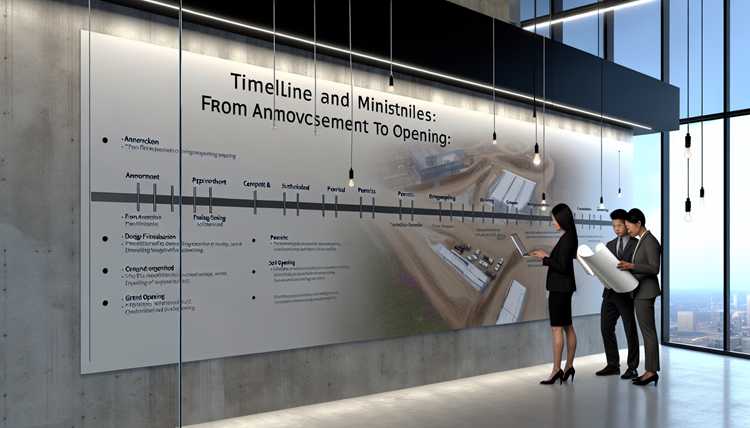
Set a target of 40% reduction in site energy use within 24 months, achieved through a high-performance envelope, heat-recovery HVAC, LED lighting, and on-site solar PV. Pair this with a community-benefit plan that allocates 2% of the project budget to local programs and a public energy dashboard. Use LEED Gold or an equivalent standard as the governance target and verify progress with quarterly reports accessible to residents.
Design choices drive tangible gains for neighbors: better indoor comfort, lower community energy demand, and public spaces that host workshops, training, and job opportunities. Early collaboration with residents, schools, and small businesses yields procurement pathways, apprenticeships, and energy literacy through hands-on demonstrations.
To keep actions aligned with the schedule, link milestones to design reviews, permit approvals, and community events. Model energy performance in the early design phase and update it after major changes to ensure the site remains on track toward the target while preserving daylight, air quality, and outdoor spaces.
Sustainable Design Targets
Envelope performance targets include insulating walls to achieve a lightweight U-value below 0.25 W/m2K and a roof assembly with R-40 or better, coupled with high-performance glazing that reduces glare while delivering at least 40% of floor area with 300 lux daylight on work surfaces. The HVAC scheme uses heat-recovery ventilation with SEER 16 and HSPF 9, supported by a 50 kW solar PV array and a 30–40% share of non-potable water use through rainwater harvesting and greywater reuse.
Lighting relies on LED fixtures with occupancy controls and daylight-responsive dimming to cut electricity use by approximately one-third compared with conventional systems. Materials emphasize low-VOC finishes, recycled content, and locally sourced products where feasible. The project targets LEED Gold or an equivalent common standard and tracks metrics on a public dashboard.
Outreach and Community Benefits
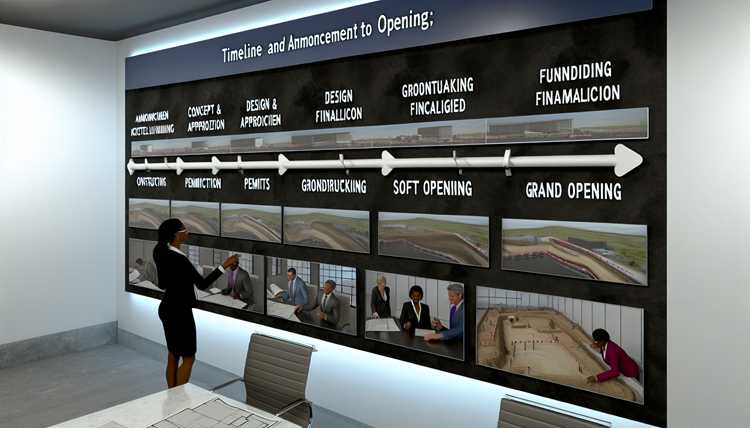
The community plan funds workforce development, training for 20 local residents, and contractor diversity initiatives. Free energy audits will be offered to 100 households in the first year, plus hands-on workshops on energy efficiency and water conservation at local schools and community centers. Local procurement targets prioritize small businesses within a 50-km radius, with monthly progress reports shared with residents.
Public spaces include a shaded plaza, rain gardens, and a demonstration area for solar and water-saving technologies, designed to host weekly events that connect tenants, neighbors, and students with practical sustainability lessons. By opening day, a formal energy-management program will begin, providing ongoing education and real-time consumption data for the community.
| Milestone | Actions | Target Date | KPIs |
|---|---|---|---|
| Baseline & Feasibility | Collect energy/water data; run community survey; define targets | Q2 2025 | Baseline data established; list of community priorities |
| Design Finalization | Lock envelope, systems, and sustainability targets; prepare dashboards | Q3 2025 | Targets validated; 90% of performance goals modeled |
| Outreach Launch | Community workshops; energy literacy program; local supplier outreach | Q4 2025 | 100 households engaged; 20 residents trained; 5 local vendors contracted |
| Construction & Installation | Install PV, water systems, shade structures; complete sustainability features | Q2 2026 | 50 kW PV operational; water use reduced by 30% |
| Opening & Monitoring | Public energy dashboard; post-occupancy evaluation; ongoing workshops | Opening | First-year energy data published; occupant satisfaction > 75% |
Ready to set up your Cyprus company?
Our specialists guide you through the entire process — registration, tax setup, and bank account opening.
Request a consultation →