
What visa routes alongside residency schemes attract international professionals to Cyprus?
Start with a firm job offer in Cyprus; an employer-sponsored work permit remains the quickest route for non‑EU professionals. Once the contract is signed, your employer initiates the residence procedure, and you can enter on a temporary basis while the case is reviewed.
For highly skilled professionals, the EU Blue Card pathway offers a practical option if you hold a recognized degree and your salary meets market standards. The employer files the application, and upon approval you gain rights to live and work in Cyprus and to pursue longer-term residence opportunities within the EU framework.
Entrepreneurship: If you plan to establish a business in Cyprus, apply for a residence permit tied to business activity. Present a solid business plan, demonstrate local capital, and outline local job creation. This track requires ongoing compliance with corporate and immigration rules.
Researchers and academics: Hosting agreements with universities or research institutes unlock residence permits for visiting scholars and research staff, often with simplified documentation and clear sponsorship from the host institution.
Student pathways: Studying in Cyprus can create channels to work after graduation through internships, part-time work during studies, and post-study work permissions linked to your degree program.
Practical steps: Assemble a dossier early–passport, clean police record, health insurance, and evidence of sufficient funds. Arrange translations by a certified translator, secure a local address, and coordinate with a Cyprus-based attorney or immigration adviser to ensure forms are accurate and timelines are aligned.
Which job sectors in Cyprus are absorbing international talent alongside what skills are in demand?
See also: Evgenios Evgeniou.
See also: TechIsland Summit.
Focus on technology, financial services, shipping, hospitality, healthcare, and energy; these sectors hire international professionals and have clear skill pipelines.
-
Technology and digital services
- In-demand roles: Software developers, Data scientists, Cybersecurity specialists, Cloud engineers, Quality assurance analysts, AI/ML engineers, IT project managers
- Skills to develop: Python, Java, JavaScript, SQL; cloud platforms (AWS, Azure, Google Cloud); containerization (Docker, Kubernetes); data analytics tooling (Pandas, SQL, Spark); BI tools (Power BI, Tableau); cybersecurity fundamentals (threat modeling, IAM, incident response); DevOps workflows (CI/CD, Git); effective documentation and cross-team communication
-
See also: ICT Sector Powers Cyprus Economic Growth.
Financial services and professional services
- In-demand roles: Banking operations specialists, Fintech product owners, Compliance and risk analysts, Tax and corporate services professionals, Auditors, Financial controllers
- Skills to develop: Regulatory reporting (IFRS), AML/KYC processes, data analytics, Excel and ERP proficiency (SAP/Oracle), API and systems integration, bilingual communication for client-facing roles, project management basics
-
Tourism, hospitality and events
- In-demand roles: Hotel and resort managers, Revenue managers, Guest services leaders, Travel tech support, Event coordinators, Food and beverage operations managers
- Skills to develop: Multilingual guest interaction, revenue optimization, inventory and vendor management, hospitality software (PMS, CRS), menu planning and service excellence, coordination of large-scale events
-
Shipping and maritime industries
- In-demand roles: Ship brokers, Logistics coordinators, Naval architects, Marine engineers, Compliance officers, Port operations supervisors
- Skills to develop: Shipping documentation and regulatory knowledge, logistics software (SAP, Oracle), route planning and port processes, data-driven performance analysis, cross-cultural communication
-
Healthcare and life sciences
- In-demand roles: Registered nurses, Medical doctors in private clinics, Pharmacists, Medical laboratory scientists, Health informatics specialists, Clinical research associates
- Skills to develop: Clinical proficiency, patient communication, electronic health records, data entry and data quality control, study and trial coordination, basic biostatistics and research methods
-
Construction, infrastructure and renewables
- In-demand roles: Civil engineers, MEP engineers, Project managers, Construction managers, Health and safety officers, Solar PV installers, Battery storage technicians
- Skills to develop: CAD/BIM (Revit, AutoCAD), project scheduling (Primavera or MS Project), cost estimation and procurement, site supervision, safety management, knowledge of green energy systems
-
Education and research
- In-demand roles: University lecturers, English language instructors, Research fellows in science and engineering
- Skills to develop: Curriculum design, classroom/online pedagogy, grant writing, data analysis for research, collaboration across international teams
What role does Beyond Borders Tourism play in driving GDP growth alongside real-world human connections?
Target cross-border experiences that pair Cypriot hosts with international visitors, boosting local spend and creating jobs while strengthening real-world human connections. According to WTTC estimates, travel and tourism contribute around 10–12% of Cyprus GDP and support roughly 15–20% of total employment, underscoring the sector’s potential to drive broad-based income and business activity.
Design three experiential pillars–authentic home-based meals and crafts, hands-on workshops with local artisans, and small, community-led tours that showcase coastal and rural life–and align them with direct flight connections to markets such as Greece, Israel, and the United Kingdom. Pilots show that adding such offerings can lift average spend per visitor by 15–25% and increase length of stay by about 0.5–1.5 days, translating into stronger visitor-derived revenue for hotels, restaurants, and transport operators.
Measure impact with a simple, data-driven approach: track cross-border referrals, partner venue revenue, and incremental tax receipts linked to these packages. In small economies, tourism multipliers for GDP typically range from 1.5x to 2.5x, meaning each additional visitor or euro spent through partner networks can yield outsized gains for suppliers and communities. Use quarterly dashboards to monitor progress and adjust marketing, pricing, and training to keep momentum on track.
Implementation plan for the next 24 months: launch three pilot corridors–Cyprus–Greece, Cyprus–Israel, and Cyprus–UK–and establish a regional marketing fund of about €5–7 million to amplify joint campaigns. Train around 200 hospitality staff in bilingual service and cross-border customer care; target a 15% rise in spend per package and a 25% uptick in cross-border bookings. Set clear KPIs for partner SME revenue, hotel occupancy linked to packages, and visitor satisfaction in real-world interactions to ensure sustained growth and resilience.
How do education partnerships and upskilling programs align with industry needs?

Partner with UCY and Cyprus University of Technology to co-create industry-aligned curricula and internship pipelines that feed local firms with job-ready graduates.
Structure education partnerships and upskilling programs around a three-tier framework: degree-linked pathways, modular micro-credentials, and employer-specific training that stacks toward formal qualifications. Each module includes practical labs, a capstone project, and oversight by an industry mentor.
Set up a joint governance council with equal representation from universities and top employers to approve content, monitor outcomes, and allocate funding. Implement a quarterly feedback loop using employer surveys and graduate placement data to refresh curricula at six-month intervals.
Measure success with concrete targets: aim for 70–85% of ICT and business services graduates employed within six months; target 15–25% salary uplift for graduates after the first year; achieve 85–90% employer satisfaction with training programs as shown in end-of-program surveys. Publish an annual impact report with case studies and measurable outcomes.
Design delivery for flexibility: on-campus labs for hands-on work, evening cohorts for working professionals, and online modules with live sessions from industry mentors. Ensure micro-credentials are recognized by national qualification frameworks and can be stacked toward degree credits at partner universities.
Strategic partnership models
Model A combines a jointly issued degree with embedded internships; Model B offers employer-funded upskilling with partial government co-funding and agreed performance targets; Model C provides modular micro-credentials that unlock advanced standing in degree programs. Each model includes a clear governance charter, shared funding plan, and a set timeline for program roll-out.
Implementation and measurement
Launch two to three pilots within the next 12 months focused on ICT, finance, tourism, and logistics; expand to six to eight programs within two to three years. Use quarterly dashboards to track six-month placement rates, 12-month retention, and employer satisfaction, and adjust content accordingly. Produce annual reports that include case studies of successful placements and degree credits earned through micro-credentials.
What infrastructure with digital frameworks accelerates talent mobility and startup growth?
Create a single digital mobility portal that consolidates visa eligibility, work permits, and startup founder onboarding, with end-to-end status tracking and automated document checks. Target initial approvals within 7 days and renewals within 14 days to keep teams intact and attract international talent.
Pair the portal with an eIDAS-compliant digital identity and remote KYC workflow that uses biometric verification, automated document checks, and secure storage under GDPR. Enable two-factor authentication and encryption at rest and in transit to protect data.
Integrate banking, payroll, and tax services via open APIs so new hires can open local bank accounts, set up payroll, and file taxes from day one. Provide a sandbox for payroll integration and a standard data model to minimize integration time to under 30 days for a typical fintech or software startup.
Adopt a cloud-based HR and talent management stack that supports remote onboarding, background checks, and professional license verification, with pre-built connectors to common applicant tracking systems and CRMs.
Establish a data exchange layer across government agencies (visa, labor, social security) and private partners (banks, telecoms) via secure APIs, with documented data schemas and rate limits. This reduces adaptation time for new entrants by 40-60%.
Create a talent mobility data cockpit with dashboards showing time-to-approve, bottlenecks, pipeline health, and regional talent availability. Use these insights to iterate policy and streamline processes, with quarterly reviews.
Key infrastructure components
Unified mobility portal for visa, permits, and onboarding anchored by standard data models and API contracts; includes status tracking, notifications, and audit trails.
eIDAS-based digital identity, remote verification, and privacy-by-design safeguards integrated with government registries and partner services, enabling seamless applicant authentication across agencies.
Open API layer that connects banks, payroll providers, tax authorities, telecoms, and cloud HR tools, with a shared security baseline and modular connectors.
Metrics and governance for rapid mobility
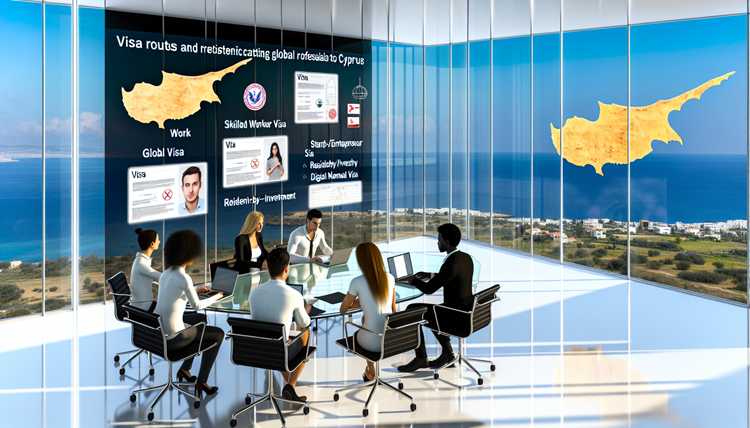
Define quarterly targets for processing times (initial approvals within 7 days, renewals within 14 days) and measure time-to-onboard for startups entering Cyprus’ talent market.
Implement GDPR-aligned data controls, ISO 27001 or equivalent security certification for the platform, and regular third-party penetration tests; publish anonymized metrics to build trust with international employers and applicants.
Which public-private initiatives support cross-border talent exchange plus sustainable tourism?
Establish a Public-Private Talent Exchange Hub in Cyprus that connects universities, hospitality groups, and travel-tech firms with regional partners in Greece and Israel, funded by a joint grant pool and a streamlined visa track for researchers and skilled professionals.
Set up a cross-border mobility corridor featuring fellowships, short-term exchanges, and co-sponsored residencies for tourism, culture, and technology roles.
Define clear targets: by year 2, inaugurate 3 jointly run centers; recruit 200 rotating fellows annually; launch 25 sustainable tourism pilots with measurable outcomes such as energy savings, reduced water use, and improved visitor satisfaction.
Structure governance with a shared slate of responsibilities: public agencies align visa rules and regulatory processes; private-sector partners finance pilot projects and provide internships; universities supply research talent and rigorous evaluation.
Implement concrete pilots: in Limassol and Larnaca, deploy energy-efficiency upgrades across 5 hotel groups; in Pafos, develop archaeology-site tourism with enhanced visitor services and online ticketing; in Troodos, develop nature-based experiences with small-operator cooperatives.
Funding and timeline: blend EU and national funds with private matching; aim to launch in early 2026 and sustain a 5-year budget; provide annual reporting to track progress against defined KPIs and ensure accountability.
Impact and replication: success will attract more professionals to residency options; results will be shared with EU partners to enable scale across the region and support sustainable growth in tourism-enabled employment.
How can businesses measure ROI from talent-driven tourism and international talent mobility in Cyprus?
Launch a unified ROI model for talent-driven mobility in Cyprus and track it in a single dashboard that ties relocation costs to measurable business outcomes within the first year.
Define the core equation as ROI = (Monetized benefits − Costs) / Costs. Monetized benefits cover productivity gains from international hires, enhanced tax and social contributions, increased local supplier spend tied to relocation, and tourism-related spending generated by staff and their families visiting Cyprus for work, training, or assignments.
Measure productivity uplift by comparing output per employee against a baseline before mobility, using revenue per employee, gross margin per project, or unit output. Track time-to-hire and retention for international hires, as well as onboarding efficiency. Capture tax receipts and social security contributions from relocated staff and dependents through the Cyprus Tax Department and social security authority, plus incremental spend with hotels, housing providers, schools, and professional services. Add tourism-related metrics such as business trip frequency, conference attendance, and family visit accommodations booked through relocation packages.
Data sources include HRIS and payroll for salary and benefits, finance for total costs, tax and social security records, CTO and tourism data for outbound/inbound tourism impact, and supplier invoices from housing, relocation services, and local vendors. Build the dashboard to refresh monthly, with quarterly deep-dives on the most material drivers.
Example scenario: five international hires. Upfront relocation and visa costs €25k per person, onboarding and training €5k per person, plus set-up costs €30k – total first-year costs around €180k. First-year monetized benefits include productivity uplift €180k, tax and social contributions €70k, local supplier spend €40k, and tourism-related spending €60k, plus new client revenue €40k. Total annual benefits €390k. Net benefit €210k. ROI ≈ 1.17x; break-even occurs within the first year if benefits accrue steadily, with a 9–12 month payback window depending on timing of bookings and project cycles.
Embed governance by appointing a focal owner in HR or Corporate Strategy, set quarterly targets, and use scenario analyses to test sensitivity to talent retention rates, visa processing times, and tourism fluctuations. Align metrics with Cyprus-specific programs, such as fast-track work permits and eligible residency schemes, so benefits from visa routes are reflected in the model. Use the results to justify expanding talent mobility pilots to other business units or regions where similar incentives exist.
Ready to set up your Cyprus company?
Our specialists guide you through the entire process — registration, tax setup, and bank account opening.
Request a consultation →