

Invest Cyprus - Targeted Actions to Promote also Attract Investments in Tourism alongside Hospitality – Climate Issues
Recommendation: Implement a two-year tax credit program that covers 30% of eligible capital expenditures for energy-efficient upgrades in hotels, resorts, and tourism facilities, capped at €6 million per project. Pair this with a €50 million climate-friendly tourism fund to subsidize retrofits and renewable energy installations. The package should start in the next fiscal year and run through year two, with strict eligibility criteria and an online application portal to ensure quick access for mid-sized operators.
To attract investments in tourism in parallel with hospitality, targeted actions include establishing a one-stop investment desk in Nicosia, streamlining permits within 60 days for climate-smart projects, and offering performance-based grants tied to energy savings of at least 25% compared with baseline facilities. In 2024–2025, a pilot could prioritize boutique eco-resorts along the coast with rooftop solar and water reuse systems.
Climate issues require concrete standards: require hotels with more than 25 rooms to implement energy-management systems, install water-efficient fixtures, and deploy solar water heating; promote green building certification for new construction; support urban tree canopy expansion to cut heat load in peak months by 5–15%. A phased retrofit plan with a five-year horizon could yield an average internal rate of return around 7–12% for upgrades, while cutting annual emissions from tourism facilities by 20–30%.
Beyond physical upgrades, Invest Cyprus should partner with European funds and regional lenders to unlock €200-€350 million in green financing over five years. Data dashboards tracking energy intensity, occupancy, and emissions will allow authorities to adjust incentives every six months, ensuring transparent progress. The plan also includes capacity building for operators on climate-resilient service design, waste reduction, and sustainable supply chains.
Fast-Track Permitting toward Climate-Resilient Tourism Projects
Adopt a 90-day Fast-Track Permitting window for climate-resilient tourism projects, with a dedicated single-point-of-contact and a mandatory digital submission portal.
Publish a precise eligibility checklist and require projects to demonstrate climate-resilience features, with an auditable pre-screen within seven days and an online status tracker for applicants.
Assemble a cross-agency review team that includes planning, environmental, water, energy, and cultural heritage offices to run parallel reviews and minimize back-and-forth.
Define a staged review timeline: 14 days for eligibility validation, 30 days for technical assessment, and 46 days for the final decision, totaling 90 days. If a request requires additional information, set a fixed 10-day response window and avoid rework cycles.
Use standardized EIA templates and pre-approved design modules that cover climate-resilient features such as flood protection, coastal stabilization, energy efficiency upgrades, water reuse systems, and heat mitigation for outdoor spaces.
Offer incentives that attach permits to resilience outcomes, while requiring performance guarantees tied to milestones. Create a transparent online dashboard that shows status, milestones, and any conditions, with public, periodic reports on progress.
Monitor metrics closely: average time to decision, frequency of information requests, and post-approval adherence to resilience commitments. Benchmark progress against target project pipelines in tourism and hospitality, and publish results quarterly to guide future policy adjustments.
Tax alongside Grant Schemes towards Green Hospitality Investments
Adopt a bundled tax credit and grant package that accelerates green hospitality upgrades. Offer a tax credit equal to 30% of eligible capital expenditures for energy efficiency, water conservation, and renewable energy systems, capped at €1,000,000 per project. Pair this with a grant covering 20% of eligible costs, disbursed at milestones or upon completion. Require demonstrable energy performance improvements, such as at least a 20% reduction in site energy use and a verified EPC upgrade to a higher band. Eligible measures include high-efficiency heat pumps, LED lighting, solar PV, solar thermal, smart controls, insulation upgrades, and water reuse systems.
Implementation framework
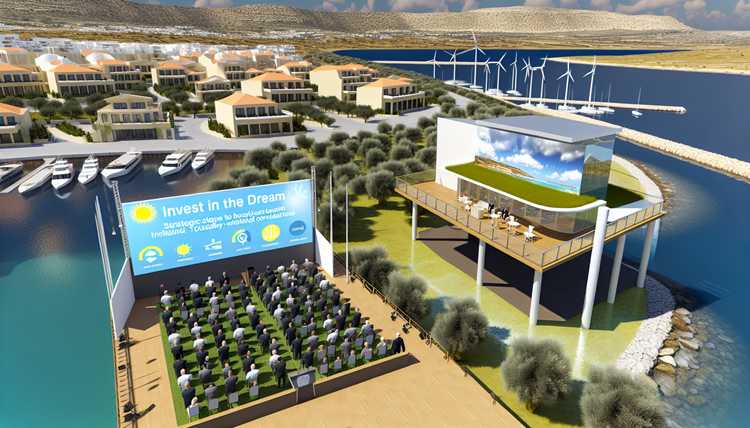
Use a single-window online portal for applications, with predefined eligibility criteria and a 60-day decision window. Co-financing rules prevent overlap with existing financing; grant and tax credit awards are conditional on the project achieving installed capacity milestones verified by an independent assessor. Disburse grants upon milestone completion or after project handover; the tax credit is applied in the following corporate tax period, with carry-forward options for unused credits.
Include a performance-based claw-back mechanism: if energy savings fall short of targets by more than 15% in any year, a proportional portion of the grant or tax relief can be recovered. Align incentives with project lifetimes by supporting asset depreciation over five years and encouraging long-term maintenance contracts.
Impact and governance
Allocate an annual budget for the combined schemes starting at €60 million in the initial years and rising to €150 million by year five as uptake grows. Track key indicators: annual CO2e reductions, energy intensity per square meter, renovation pace in hotels and resorts, and local job creation in energy retrofit teams. Require annual verification of energy savings and asset performance by an independent auditor to ensure transparency and value for money.
Public-Private Partnerships towards Coastal Climate Adaptation Initiatives
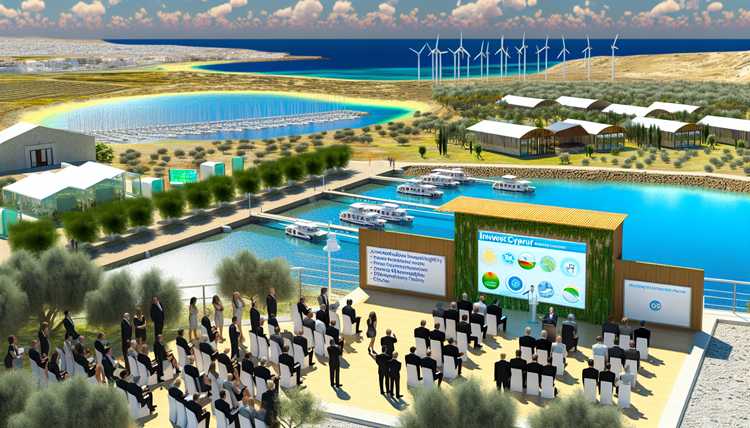
Establish a dedicated coastal adaptation PPP fund with a clear project pipeline, standardized concession contracts, and a multi-level governance chamber to align public objectives with private finance. Start with a 2025–2027 pilot along Limassol and Paphos coastlines, then scale to Ayia Napa and Larnaca corridors. Target private capital to cover 60%–70% of capital expenditures through availability-based payments and performance incentives tied to erosion reduction, dune resilience, and water safety outcomes. The first tranche should total €120–€180 million across three projects, with a 20% contingency. A dedicated procurement unit will run a two-stage process, including bidder pre-qualification and explicit ESG criteria. The framework must include precise risk allocation, independent verification, and transparent progress reporting.
Key PPP Structures and Financing Mechanisms
See also: Government Financing Model for Strategic Business Park....
Align project design with tourism value by using three standard PPP structures suited to coastfront investments: Availability Payment Concessions, where the public sector pays for delivered performance; Design-Build-Operate-Maintain (DBOM) for end-to-end delivery; and Joint Venture SPVs that share revenue and risk with municipal equity. Deploy Hybrid PPPs when upfront grants are needed for nature-based or soft-defense solutions. For each structure, assign risk as follows: policy and regulatory changes sit with the public sector; construction, maintenance, and operational risk sit with the private partner; catastrophe risk is covered by insurance; independent verification confirms performance against contract KPIs. This mix yields predictable returns for investors while ensuring timely upgrades to beaches, flood defenses, and coastal health.
| Model | Benefits | Risk Allocation | When to Use |
|---|---|---|---|
| Availability Payment Concession | Clear performance outcomes, long-term sustainability | Public pays for outputs; private bears construction and maintenance risk | Large-scale defenses with measurable deliverables |
| DBOM | Single accountability, faster delivery | Private handles design, build, and ongoing maintenance | Infrastructure-heavy coastal upgrades |
| Joint Venture SPV with Revenue Sharing | Local ownership, aligned incentives | Shared residual risk; revenue-based payments | Tourism-adjacent facilities plus access management |
| Hybrid PPP (Grant + Concession) | Lower upfront cost, supports nature-based solutions | Public grant reduces private capital need; performance risk remains with private partner | Nature-based or hybrid interventions needing subsidies |
Implementation Roadmap and Metrics
Launch an inter-ministerial Coastal Adaptation Office that coordinates with city councils, universities, and tourism bodies. Compile baseline shoreline data using LiDAR and satellite imagery, define hazard zones, and identify four pilot sites by year one. Establish a 2025–2030 pipeline with four projects totaling €250–€320 million in capex; private capital should fund 60–70% via availability payments and performance incentives. Use a two-stage procurement: pre-qualification followed by open tender, with explicit ESG and climate resilience criteria. Publish an open-data portal for project dashboards and quarterly updates to maintain investor confidence.
Track performance with concrete metrics: erosion rate reduction (percent change per year), dune height and width restoration (meters), flood depth reduction (centimeters), protected population and assets, tourism occupancy growth, and job creation linked to each project. Include risk transfer indicators, insurer premiums versus avoided losses, and contract compliance timelines. Conduct a mid-term review at year three and a post-implementation assessment after year seven to adjust pricing, maintenance standards, and additional site upgrades.
Financing Mechanisms with Risk Mitigation towards Climate-Smart Hotels
Adopt a blended-finance facility anchored by Invest Cyprus, local banks, and development-finance institutions to fund upgrades that cut energy use and emissions by 30% within two to three years. Structure the package so concessional capital covers 20-35% of capex, while senior debt accounts for 50-60% and mezzanine debt for 10-20%, aligning lenders with thermal efficiency milestones.
Key financing instruments
Blended finance enables risk sharing and lower cost of capital for climate-smart upgrades. Pair concessional capital with bank debt to reach bankable project economics. Green bonds and sustainability-linked loans offer liquidity and KPI-based pricing: margins reduce by 0.15–0.75 percentage points when energy intensity or emissions improve by agreed benchmarks over 2–3 years. For mid-market hotels, target issuances of €5–30 million with tenors of 5–12 years. Implement energy performance contracting (EPC) with an accredited ESCO to guarantee energy savings; savings serve as the primary repayment source, reducing residual risk for lenders. Combine with on-site solar PV and demand-side management to boost bill savings, typically €0.25–0.90 million per year for a 100-room property depending on climate and usage. Seek EU and national grants up to 25–35% of capex for energy efficiency and renewable installations; tie grant flow to verifiable milestones.
Risk mitigation and governance
Integrate risk-transfer tools: parametric weather insurance for heat stress, catastrophe risk transfer to strengthen debt service during extreme events, and credit guarantees for tenant operators. Establish a debt-service reserve account covering 3–6 months of payments during the first 2–3 years. Build a strong governance framework with independent measurement and verification (M&V) of energy savings, baselining, and annual audits. Include a phased rollout plan with clear milestones, ensuring lenders see steady improvement in energy intensity and a track record before scaling to a portfolio of hotels. Use energy performance contracts to shift performance risk away from hotel operators; require performance guarantees and third-party verification of savings.
Strategic Marketing alongside Investor Outreach to Eco-Conscious Tourism Markets
Implement a 6-month integrated program that pairs targeted hospitality marketing with investor outreach focused on sustainable tourism projects. Total budget: €1.4–1.8 million, distributed as 55–60% to paid media, 25–30% to content and owned channels, and 15–20% to events and partnerships. Target metrics: a 20–25% rise in inquiries about green certification and energy upgrades; 6–10 signed LOIs; a 2.5x lift in investor engagements; and a 30–40% share of leads passing a climate-screening filter.
- Market segmentation and personas: eco-tourists seeking low-carbon experiences; nature lovers; responsible travelers on short- and mid-length trips; investors seeking climate-aligned assets (eco-resorts, energy-efficient renovations, water-saving systems). Build profiles with age bands, travel motives, channel preferences, and certification awareness levels.
- Channel mix and budget discipline: LinkedIn and industry portals for investor outreach; Google Search and programmatic ads for intent-driven traveler traffic; social content on Instagram and YouTube for storytelling; partnerships with sustainability platforms and travel media. Allocate 60% digital advertising, 25% owned content, 15% events/partnerships.
- Messaging framework: emphasize Cyprus’ climate plan, on-site energy upgrades, water management, and support for local communities. Highlight transparent metrics: carbon intensity per room, renewable energy sourcing, and third-party audit results. Ensure all claims are backed by verifiable certificates (EarthCheck, Travelife, Green Key) and credible data.
- Content plan and calendar: publish 2 case studies per month showing hotel renovations and low-emission transport options; 1 explainer video per quarter on the carbon-reduction path; monthly investor roundtables with 20–30 participants; quarterly site visits or virtual tours for potential investors.
- Investor outreach design: prepare a 20–25 slide deck with market sizing, pipeline projections, and policy context; include a climate-risk appendix, energy savings projections, and CAPEX/OPEX breakdown; offer 1:1 meetings and quarterly updates; track engagement with a CRM and standard follow-up templates.
- Partnerships and certifications: collaborate with local universities for research on water and energy; align with cert bodies (EarthCheck, Green Key, Travelife); partner with conservation groups to validate impact claims; secure co-branding opportunities on campaigns.
- Measurement and governance: dashboards for impressions, click-through, conversion to inquiries, and investor contacts; monitor property pipeline, LOIs signed, and time-to-investment metrics; conduct monthly reviews and adjust spend based on verified ROI signals.
See also: What visa routes alongside residency schemes attract....
See also: Tax Professionals Urge Gender-aware, Climate-smart Fiscal....
Risks and mitigations: avoid overstating metrics; require independent verification of sustainability claims; maintain regular third-party audits; publish an annual impact summary to regulators and stakeholders.
Expected outcomes include a stronger pipeline of green investments, increased traveler interest in certified properties, and improved alignment between Cyprus tourism marketing and climate-action objectives.
Ready to set up your Cyprus company?
Our specialists guide you through the entire process — registration, tax setup, and bank account opening.
Request a consultation →