

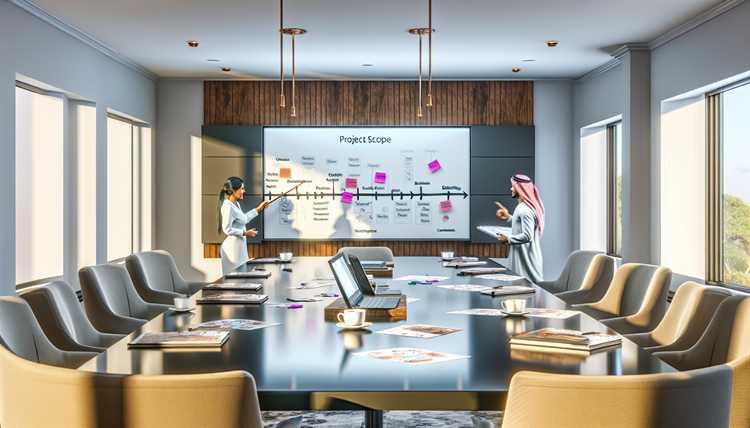
Project Scope
Define the core deliverables and boundaries within 24 hours of kickoff. This fast, focused decision anchors planning for all floors, ensuring teams align on what matters most from the start.
Capture input from product, facilities, and operations leads to a shared scope document. Include explicit definitions for makerspaces and laboratories, noting what equipment, software, and safety requirements are included. A two-page scope document that pairs deliverables with spaces helps avoid misinterpretations and reduces rework later.
Maintain a flexible approach by slicing the project into stages with clear gates. Each gate authorizes the next tranche of work and allows minor adjustments within the core boundaries. Use a lightweight change process that records decisions, owners, and impact to schedule and cost.
Follow a practical 5-step cadence: 1) lock the core requirements; 2) separate in-scope from out-of-scope activities; 3) map dependencies across floors and interfaces; 4) set concrete milestones and acceptance criteria; 5) implement a weekly scope review with assigned decision-makers and owners, ensuring alignment across teams and sites.
Construction Timeline: Phases, Milestones, Critical Deliverables
Set baseline timeline at 20 weeks for a typical two-floor facility, assign a dedicated owner for each phase, and hold weekly reviews to validate progress against the key milestones. Identify long-lead items early, secure firm delivery dates from suppliers, and align makerspaces and laboratories under the same core design to minimize rework and changes in layout. Build flexible space planning to permit future reconfigurations without major disruption.
See also: KV Fund.
Phase 1 (Weeks 1-4) covers design and permitting. Output includes the final design package, permit package, fire and life-safety plan, permit submissions, and coordinated shop drawings for floors to support flexible layouts.
Phase 2 (Weeks 5-9) covers site preparation and core construction. Activities include mobilization, foundation work, core shell, stairs and elevators, and early MEP coordination. Deliverables span foundation drawings, core shell completion, and updated coordination drawings for mechanical, electrical, and plumbing systems.
Phase 3 (Weeks 10-16) handles interior fit-out for makerspaces and laboratories. The approach uses modular casework, flexible partitions, fixed utilities in a core strip, and raceways for data and power. Deliverables include finish schedules, equipment lists, and tested systems for lab benches and workshop zones.
Phase 4 (Weeks 17-20) covers commissioning and handover. Activities include systems testing, safety training, as-built drawings, operations manuals, and turnover documentation. Final occupancy permit depends on completed testing and sign-off from authorities.
Phases and Milestones

Milestones by phase: design freeze by Week 4; permit issued by Week 5; foundation pour by Week 6; core shell and floors ready by Week 9; MEP rough-in completed by Week 11; interior fit-out ready by Week 16; commissioning tests complete by Week 19; occupancy permit issued by Week 20.
Critical Deliverables
Phase 1 delivers: final design package, permit package, and fire and life-safety plan. Phase 2 delivers: foundation drawings, core shell completion, and updated MEP coordination. Phase 3 delivers: finish schedules, equipment lists, and lab benches with validated utilities. Phase 4 delivers: commissioning reports, as-built drawings, and operations manual.
Innovation Support Ecosystem: Programs, Mentorship, Collaboration Spaces
Launch three aligned tracks–intake, development, and scale–with weekly milestones and quarterly reviews. Place activities on three floors to optimize flow: floor 1 handles intake and rapid prototyping, floor 2 hosts mentorship and workshops, floor 3 houses collaboration laboratories and demo rooms. The plan centers on core facilities: laboratories, flexible makerspaces, and common equipment hubs to accelerate prototyping.
Programs
Run three annual cohorts of 8–12 teams over 12 weeks, with weekly sprints and a final demo day. Each cohort receives up to $15k in prototyping credits and access to the shared equipment across floors. Offer tracks for hardware, software, and social impact to foster cross‑disciplinary collaboration, and implement rolling intake with a 45‑day screening and 30‑day onboarding. Track outcomes such as MVPs deployed, pilots formed with external partners, and follow‑on funding secured within 12 months.
Mentorship and Collaboration Spaces
Assign a dedicated mentor to each team for six months, targeting a maximum mentor-to-team ratio of 1:2. Schedule monthly office hours and a quarterly deep‑dive, plus 4 hours of mentor‑led sessions per month. Create collaboration spaces on all floors with modular furniture, sound‑controlled pods, and digital whiteboards, plus a lab zone equipped with 3D printers, laser cutters, solder stations, and testing rigs. Rotate teams through zones to encourage cross‑pollination and host weekly “open lab” sessions to surface lessons and invite external experts. Measure success by mentor engagement hours, number of cross‑team projects launched, and the rate at which prototypes reach pilots.
Sustainable Design; Resource Management: Energy, Water, Materials
Set a target to cut energy use by 25% in core facilities; focus on laboratories and flexible makerspaces within facilities: implement LED lighting, smart controls, and sub-metering across spaces.
Energy
Replace fluorescent lighting with LED fixtures; install occupancy sensors in labs and public areas; add variable-speed drives on pumps and fans; deploy CO2 sensors for demand-controlled ventilation where appropriate; install sub-metering per floor and per zone and link to a centralized dashboard; add on-site solar to offset 10–20% of annual electricity needs; perform commissioning after each upgrade and review meter data quarterly.
Water and Materials
Water: fit low-flow fixtures across restrooms and labs; pursue rainwater harvesting for non-potable uses; optimize irrigation with weather data and smart controllers; set a target to cut potable water use by 20–30% in renovations; monitor with water meters and implement leak detection across facilities.
Materials: select concrete with recycled content, FSC-certified wood, and recycled steel where possible; use low-VOC adhesives and sealants; prefer prefabricated components to cut waste; design for deconstruction to extend reuse; source within 250 miles to reduce transport emissions; track embodied carbon for major components and aim for a 15–25% reduction over a multi-year horizon.
Technology Backbone: BIM, IoT, Data Platforms, Security
Begin with a core data backbone: establish BIM as the single source of truth and connect it to live IoT streams through a scalable data platform.
- BIM as the core conductor across floors: Model spaces at floor level, tag assets, assign owners, and attach maintenance windows. Target LOD 350 during design with LOD 400 for fabrication; ensure model change events push to the data platform within seconds to trigger workflows.
- IoT integration and device governance: Deploy sensors for temperature, humidity, occupancy, and vibration in critical facilities: 6-12 sensors per 1,000 m2 in labs and makerspaces; 2-4 per 1,000 m2 in offices. Use a standardized data protocol, maintain device registry, and enable lifecycle management. Route data to central streams with clean schemas.
- Data platforms and governance: Build a unified data platform that ingests BIM, OT streams, and logs; support real-time dashboards, batch analytics, and data quality checks; enforce data retention: 5 years for operations, 7 years for asset history; latency targets: under 5 seconds for critical metrics, under 60 seconds for others.
- Security and risk management: Apply zero-trust, MFA, RBAC, and micro-segmentation; encrypt data at rest and in transit; weekly vulnerability scans; incident response within 24 hours; establish facilities: access controls and network segmentation for sensitive areas.
- Facilities and organizational alignment: Use makerspaces and flexible facilities to pilot changes; run quarterly sprints to refine models; provide dashboards for facilities managers; train teams to operate with the integrated backbone.
Stakeholders, Governance, Funding Streams: Roles, Partnerships
See also: ICT Sector Powers Cyprus Economic Growth.
See also: Valentinos Polykarpou and Limassol.
Establish a formal stakeholders map within 14 days and publish a governance charter that clearly defines decision rights, escalation paths, and accountability for core activities across floors and facilities: laboratories, makerspaces, and offices.
Form a steering group of 9-12 members, appoint two co-chairs, meet monthly, and require sign-off thresholds for budgets above $100k. Create a RACI matrix to prevent overlaps and ensure input from essential partners early in the process.
Stakeholders and Roles
Internal stakeholders include the executive sponsor, program manager, operations lead, finance controller, and legal/compliance liaison. External stakeholders provide resources and legitimacy: university laboratories, industry partners, community organizations, customers, and funders. Assign clear ownership for each workstream, establish handoffs across floors and facilities: laboratories, makerspaces, and offices, and embed a feedback loop into quarterly reviews. core activities receive priority funding and governance attention to maintain alignment with scope.
Funding Streams and Partnerships
Funding streams comprise grants from public and private sources, service revenue from lab access, equipment rental, and training programs, sponsorships, and in-kind contributions. Target a balanced mix: 40-50% grants, 25-35% services, 15-25% sponsorships, with regular 12-month forecasts and a 5% contingency reserve.
Partnerships align with the project scope via MOUs that cover joint activities, cost-sharing, IP terms, and data governance. Establish partner liaisons, run quarterly joint reviews, and document success metrics such as new co-funded projects, number of shared facilities bookings, and time-to-sign for agreement renewals.
Ready to set up your Cyprus company?
Our specialists guide you through the entire process — registration, tax setup, and bank account opening.
Request a consultation →