

Income Tax Brackets and Rates in FY 2025- - India Tax Guide
1) Compare the old and new tax regimes now to minimize your tax. Run estimates for your expected income under both options, and pick the regime that yields the lower tax after accounting for deductions you actually claim.
New regime brackets (for residents below 60): 0-2.5 lakh: 0%; 2.5-5 lakh: 5%; 5-7.5 lakh: 10%; 7.5-10 lakh: 15%; 10-12.5 lakh: 20%; 12.5-15 lakh: 25%; above 15 lakh: 30%. A 4% Health and Education Cess applies on the computed tax. Surcharge may apply at higher income levels as defined by the Finance Act, so check the latest thresholds for your gross income.
Old regime slabs and deductions: 0-2.5 lakh: 0%; 2.5-5 lakh: 5%; 5-10 lakh: 20%; above 10 lakh: 30%. Unlike the new regime, this option allows a standard deduction and multiple deductions under sections such as 80C and 80D, which can reduce taxable income significantly for eligible taxpayers.
To plan effectively, use an annual tax projection for FY 2025-26, compare net tax under both options, and adjust your withholdings or pre-paid estimated tax accordingly. Keep records for deductions you claim, invest in instruments eligible under the old regime to maximize benefits, and revisit the choice each year as income and eligible deductions change. If your income includes salary, business, or capital gains, align your strategy with applicable surcharge rules and filing timelines.
Determining your regime eligibility in the AY 2026-27
See also: Corporate Tax 2025.
Compute both regimes now and pick the one that yields the lower tax after applying cess and rebates.
Overview: regime eligibility hinges on eligible deductions under the Old Regime versus the lean deductions under the New Regime. Your decisions rely on your investments under 80C, 80D, HRA claims, standard deduction, and other allowances you claim in the Old Regime.
Old Regime: You can claim a standard deduction of 50,000 for salaried employees. The basic exemption threshold depends on age: up to 2,50,000 for individuals below 60, up to 3,00,000 for seniors (60-80), and up to 5,00,000 for very senior citizens (80+). After deduction, apply slabs: 0-2.5L NIL; 2.5-5L 5%; 5-10L 20%; above 10L 30%. Add 4% health and education cess and applicable surcharge on higher incomes. Deductions under 80C (up to 1,50,000) for investments such as PF, PPF, life insurance premiums; 80D for health insurance; 80G donations; HRA exemptions where you rent; LTA. These can significantly lower your taxable base.
New Regime: You opt for lower rates but lose most deductions. The regime applies to all taxpayers and does not allow most exemptions like HRA, LTA, or 80C investments. A narrow set of employer-linked deductions may remain (for example, 80CCD(2) for NPS contributions by your employer). The tax rates typically are: 0-2.5L nil; 2.5-5L 5%; 5-7.5L 10%; 7.5-10L 15%; 10-12.5L 20%; 12.5-15L 25%; above 15L 30%. Health and Education Cess applies at 4%, plus any surcharge for high incomes as per the Finance Act.
How to decide: 1) Compute Old Regime tax by subtracting standard deduction and all eligible deductions (80C, 80D, HRA, etc.) from gross income, then apply the applicable slabs, add cess and surcharge. 2) Compute New Regime tax using the New Regime slabs on gross income (no standard deduction, no major exemptions). 3) Compare the final tax payable. 4) Consider non-tax factors like leave travel, employer allowances, or long-term savings. If your 80C investments and other deductions exceed around 1.5 lakh or your HRA and other exemptions are substantial, Old Regime often wins. If you have minimal deductions, New Regime can be cheaper.
Example for AY 2026-27 (illustrative): Salary 9,00,000 with 1,50,000 under 80C and no HRA claim. Under Old Regime: taxable income after standard deduction 50,000 and 80C 1,50,000 equals 6,00,000. Tax: 2.5L at 0%, 2.5L at 5% = 12,500; 1L at 20% = 20,000; total 32,500; cess 1,300; total 33,800. Under New Regime: gross 9,00,000 using the New slabs: 2.5L at 0%, 2.5L at 5% = 12,500; 2L at 10% = 20,000; 1.5L at 15% = 22,500; total 55,000; cess 2,200; total 57,200. Old Regime cheaper by about 23,400 in this scenario.
Practical tips: keep a running record of all 80C eligible investments and 80D premiums; calculate both paths using a tax calculator before filing; check if any new deductions or changes are allowed in AY 2026-27. This approach helps you lock in the most favorable regime for the year.
Legacy regime bands among individuals: rates, thresholds, plus calculations
Opt for the legacy regime if your total deductions under sections 80C, 80D, 80G, and other allowances plus the standard deduction reduce your tax more than the savings from the new regime for FY 2025-26. This overview outlines the bands, applicable rates, thresholds, and the calculation steps to determine tax under the legacy regime.
Legacy regime bands by age
- Non-Senior citizens (below 60 years)
- 0 to 2,50,000: Nil
- 2,50,001 to 5,00,000: 5%
- 5,00,001 to 10,00,000: 20%
- Above 10,00,000: 30%
- Senior citizens (60 to 79)
- 0 to 3,00,000: Nil
- 3,00,001 to 5,00,000: 5%
- 5,00,001 to 10,00,000: 20%
- Above 10,00,000: 30%
- Super senior citizens (80 and above)
- 0 to 5,00,000: Nil
- 5,00,001 to 10,00,000: 20%
- Above 10,00,000: 30%
Charges, deductions, and calculation steps
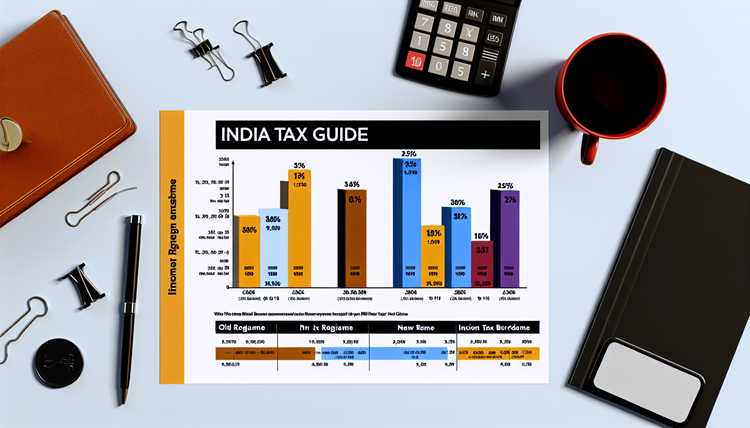
- Surcharge applies on the income tax payable for high total incomes. Rates: 10% for income tax base above 50 lakh up to 1 crore; 15% for 1–2 crore; 25% for 2–5 crore; 37% for above 5 crore. Surcharge is calculated on the tax before cess.
- Health and Education Cess is 4% on the tax plus surcharge.
- Standard deduction Rs 50,000 for salaried employees and pensioners remains available under the legacy regime.
- Section 80 deductions (e.g., 80C up to 1.5 lakh, 80D, 80G) reduce the taxable income before applying the bands.
- Start with gross salary after eligible deductions to get the taxable income under the legacy regime.
- Identify the applicable slab for the taxpayer's age group and apply the corresponding rates to each slab portion.
- Compute tax before cess and surcharge by summing the tax from all slabs.
- Apply any surcharge if the income crosses the threshold bands.
- Calculate cess at 4% on the tax plus surcharge to get the final tax liability.
Example: Non-Senior with taxable income 12,00,000 under legacy regime
- 0–2,50,000: 0
- 2,50,001–5,00,000: 2,50,000 × 5% = 12,500
- 5,00,001–10,00,000: 5,00,000 × 20% = 1,00,000
- 10,00,001–12,00,000: 2,00,000 × 30% = 60,000
Tax before cess = 1,72,500
Surcharge = 0 (income < 50 lakh)
Cess = 4% × (1,72,500) = 6,900
Total tax = 1,79,400
Modern scheme bands affecting individuals: rates, thresholds, plus calculations
Compare both regimes for FY 2025-26 to find the lower tax bill. Use the concrete steps below with your actual salary, deductions, and eligible rebates.
Key bands at a glance:
- Old regime (with deductions like 80C, standard deduction):
- 0 – 2,50,000: 0%
- 2,50,001 – 5,00,000: 5%
- 5,00,001 – 10,00,000: 20%
- Above 10,00,000: 30%
- Surcharge and cess: 4% Health and Education Cess on total tax; Surcharge varies by income (e.g., 10% on tax if total income > 50,00,000; higher brackets follow respective slabs).
- New regime (no standard deduction; fixed rates):
- 0 – 2,50,000: 0%
- 2,50,001 – 5,00,000: 5%
- 5,00,001 – 7,50,000: 10%
- 7,50,001 – 10,00,000: 15%
- 10,00,001 – 12,50,000: 20%
- 12,50,001 – 15,00,000: 25%
- Above 15,00,000: 30%
- Surcharge and cess: 4% Health and Education Cess on tax plus surcharge as applicable.
Calculation example (illustrative, no rebates beyond standard deduction in the old regime):
- 1) Gross salary: 12,00,000. Old regime: apply standard deduction of 50,000, taxable income = 11,50,000.
- 2) Old regime tax: 0% up to 2,50,000; 5% on 2,50,000 = 12,500; 20% on 5,00,000 = 1,00,000; 30% on 1,50,000 = 45,000; subtotal tax = 1,57,500. 4% cess on tax = 6,300; total = 1,63,800.
- 3) New regime tax: 0% up to 2,50,000; 5% on 2,50,000 = 12,500; 10% on 2,50,000 = 25,000; 15% on 2,50,000 = 37,500; 20% on 2,00,000 = 40,000; subtotal tax = 1,15,000. 4% cess on tax = 4,600; total = 1,19,600.
- 4) Result: New regime yields lower tax in this scenario by 44,200; adjust for eligible deductions under the old regime (e.g., 80C) to compare your actual case.
Senior citizens: slab differences, thresholds explained
If you are 60 or older, claim the Senior Citizen slab to minimize tax; if you are 80 or older, claim the Super Senior slab for the highest exemption. This approach aligns with FY 2025-26 rules and reduces taxable income before applying rates and cess.
Overview: senior citizen slabs set different exposure levels. For age 60-79, the basic exemption is 3,00,000; for age 80+, it is 5,00,000. After exemptions and allowable deductions (such as a standard deduction of 50,000 for salaried taxpayers), tax is levied on the remaining amount using the standard slab rates: 60-79: 5% on 3,00,001-5,00,000; 20% on 5,00,001-10,00,000; 30% above 10,00,000. For 80+, tax is 20% on 5,00,001-10,00,000; 30% above 10,00,000. A 4% health and education cess applies to the computed tax, and higher total income may attract a surcharge under current rules.
Key thresholds by age group
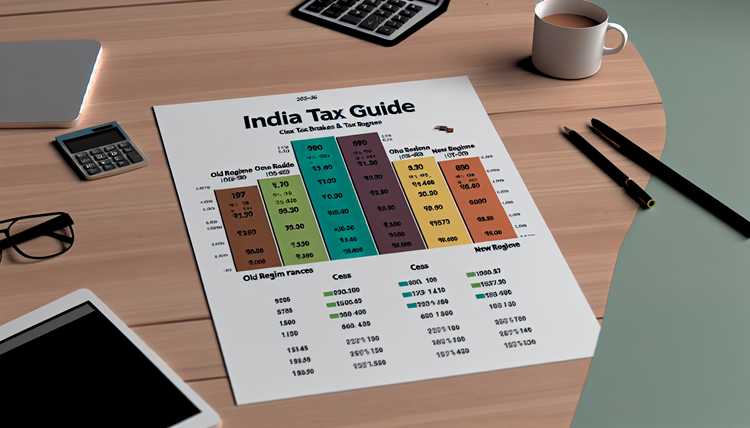
Details: 60-79: 0 up to 3,00,000; 3,00,001-5,00,000 at 5%; 5,00,001-10,00,000 at 20%; above 10,00,000 at 30% (before cess). 80+: 0 up to 5,00,000; 5,00,001-10,00,000 at 20%; above 10,00,000 at 30% (before cess). Surcharge is applicable for high income as per current rules.
Practical planning tips
Maximize deductions under Section 80C (EPF, PPF, life insurance, NSC), Section 80D (medical insurance), and other eligible sections to further reduce taxable income. If you receive pension or salary, claim the standard deduction of 50,000, and adjust your TDS accordingly to avoid a tax shortfall. Keep track of exemptions and choose the age category applicable as of the assessment year; misclassifying age can lead to higher tax.
Rebates, allowances, plus exemptions shaping overall burden
Recommendation: Maximize the standard deduction of Rs 50,000 for salaried employees, fully utilise Section 80C up to Rs 1,50,000, and claim the 87A rebate if your total income is at or below Rs 5 lakh.
Overview: Rebate, allowances, and exemptions speak to different stages of the tax computation–employer payroll, investment choices, health coverage, and home financing–shaping the final burden. The following sections translate this into practical steps for FY 2025-26.
Key rebates and exemptions at a glance
| Category | Section | Typical limits | Tax effect |
|---|---|---|---|
| Standard deduction | Salary income | Rs 50,000 | Reduces taxable salary, lowering TDS and payable tax |
| 80C Deductions | 80C | Rs 1,50,000 | Investments/payments like PPF, EPF, LIC, ELSS |
| 80D Health insurance | 80D | Self/Family: Rs 25,000; Senior citizens: Rs 50,000 | Premium deductions; preventive health checkups extra up to Rs 5,000 |
| 80D extra (NPS) | 80CCD(1B) | Rs 50,000 | Additional deduction for NPS contributions |
| 87A rebate | 87A | Up to Rs 12,500 | Tax rebate for total income up to Rs 5 lakh |
| HRA exemption | HRA | Depends on city and salary; min of three values | Exemption on rent allowance based on least of actual HRA, rent paid minus 10% of salary, or 40%/50% of salary |
| 80G Donations | 80G | Donations; 100% or 50% of donation; cap varies | Deduction per donation category; many donations have 10% of gross total income cap for cash contributions |
| Interest on savings | 80TTA/80TTB | 80TTA: Rs 10,000; 80TTB: Rs 50,000 (senior citizens) | Deduction on interest income from savings accounts; higher limit for senior citizens |
| Interest on home loan | Section 24 | Self-occupied property: up to Rs 2,00,000 | Deduction from rental income; lets you offset mortgage interest |
Practical planning tips
See also: Tax Benefits for Non-Domiciled Shareholders in Cyprus.
See also: Residency by Investment in the Union.
Start with the 50k standard deduction and 80C up to 1.5 lakh; allocate funds across PPF, EPF, ELSS, NSC to balance liquidity and growth.
Bundle health cover under 80D, ensuring premiums stay within the eligible limits; include preventive health checkups to claim an additional 5,000.
Optimize HRA by providing rent receipts and, if applicable, your landlord's PAN to substantiate the exemption; adjust your salary structure if you relocate to a metro vs non-metro city.
Leverage LTA benefits when you plan travel in India; keep travel bills and ensure the claim aligns with your employer's policy.
Maintain donation receipts for 80G; prefer funds with 100% deduction where possible to maximize relief while meeting social goals.
Track home loan interest and consider whether a self-occupied or let-out property yields a higher deduction in your tax computation.
TDS, upfront levy, compliance milestones in the FY 2025-26
Set up automated TDS deductions and e-filing workflows now to meet FY 2025-26 deadlines and minimize late filings. Assign clear owners for salary, vendor payments, and non-resident payments, and build a data sanity check that maps PAN/TAN to each recipient. Ensure your payroll and procurement systems feed directly into the TDS engine to reduce manual rework.
Overview: TDS, upfront levy, compliance milestones for FY 2025-26 focus on timely deposits, accurate returns, and proactive reconciliation with Form 26AS. The aim is to avoid mismatches that trigger notices and interest charges.
Key deadlines and thresholds
Advance tax installments: 15 June, 15 September, 15 December, and 15 March. If the estimated annual tax payable exceeds Rs 10,000, these installments must be paid; otherwise they may not be required.
TDS return deadlines: Form 24Q (salary) is filed monthly by the 7th of the following month. Form 26Q (payments to residents other than salary) and Form 27Q (payments to non-residents) are filed quarterly, by the 15th of the month following the end of each quarter. The quarterly periods are Q1: Jul-Sep (due 15 Oct); Q2: Oct-Dec (due 15 Jan); Q3: Jan-Mar (due 15 Apr); Q4: Apr-Jun (due 15 Jul).
Deposits to the government: TDS amounts must be deposited by the due date, typically on or before the 7th of the following month for the respective return type. Maintain separate payment references and ledger entries for salary and non-salary TDS to avoid cross-misapplication.
Reconciliation with Form 26AS: perform monthly reconciliation to align TDS with Form 26AS and resolve any mismatches promptly before year-end filing. Use automated matching to flag gaps and coordinate with recipients to correct PANs or withholdings.
Upfront levy provisions: verify correct classification of recipients to apply withholding at source accurately. Maintain complete PAN data, track the withholding head, and implement any FY 2025-26 amendments that affect upfront levy on high-value or cross-border transactions. Update your TDS configuration accordingly to reflect these changes.
FY 2025-26 compliance milestones
Q1 milestones: by 15 Oct 2025 file Q1 returns for 24Q and 26Q, ensuring July–September deductions are uploaded and PAN mappings are complete. Run a reconciliation sweep against Form 26AS to fix any discrepancies well before the due date.
Q2 milestones: by 15 Jan 2026 file Q2 returns, verify timely deposits, and confirm that all vendor and employee records are up to date. Review non-resident payments under 27Q and ensure PAN issuance is complete for all recipients.
Q3 milestones: by 15 Apr 2026 file Q3 returns, perform mid-year data quality checks, and refresh the e-TDS dashboard to catch outliers. Validate cross-border withholding entries and ensure correct categorization in the ledgers.
Q4 milestones: by 15 Jul 2026 file Q4 returns, complete year-end TDS reconciliation, prepare consolidated statements for payroll and vendor payments, and align TDS credits with ITR filing. Close any remaining mismatches and generate final reports for internal audit and governance reviews.
NRIs, capital gains, surcharge rules within the FY 2025-26 slabs broadly
Recommendation: For NRIs with Indian-sourced gains in FY 2025-26, optimize for LTCG by keeping assets beyond 12 months to benefit from the 10% tax on gains above Rs 1 lakh, and limit STCG exposure by avoiding frequent flips within 12 months where possible.
overview: NRIs are taxed on gains from Indian assets, with capital gains rules tied to asset type and holding period. Short-term capital gains on listed equity shares and equity-oriented instruments are taxed at 15% plus applicable surcharge and health cess. Long-term capital gains on listed equity shares and equity funds, with a holding period of 12 months or more, are taxed at 10% on gains above Rs 1 lakh; gains up to Rs 1 lakh remain exempt under section 112A.
For FY 2025-26, surcharge applies on the base tax according to total income: 0% up to 50 lakh, 10% on 50 lakh to 1 crore, 15% on 1 crore to 2 crore, 25% on 2 crore to 5 crore, and 37% above 5 crore, with a 4% education cess on the tax payable. These rates affect NRIs as well, when computing tax on capital gains in addition to the base rates for STCG or LTCG. The old vs new tax regime for ordinary income can influence overall tax if you have other salary or business income, but the capital gains rates remain separate under 112A for LTCG and 115A for STCG for NRIs.
Note: TDS at the time of sale typically reflects these rates: 15% for STCG and 10% for LTCG on gains above Rs 1 lakh, plus the applicable surcharge and cess, subject to tax deducted at source rules. NRIs should ensure correct PAN details with buyers and consider claiming DTAA relief through the applicable tax return if DTAA provides a lower rate for gains or for certain income types. File returns to reclaim excess TDS if required and to report capital gains properly.
Key points for NRIs
STCG on listed shares held under 12 months: 15% tax plus surcharge and cess; LTCG on listed shares held 12 months or more: 10% tax on gains above Rs 1 lakh; first Rs 1 lakh of LTCG gains are exempt; surcharge and cess apply on total tax payable.
Practical steps and examples
Example: If an NRI realizes LTCG of Rs 6 lakh in FY 2025-26, tax under 112A is 10% on Rs 5 lakh = Rs 50,000. Add 4% cess on Rs 50,000 -> Rs 2,000; total tax around Rs 52,000 before any applicable surcharge. If total income places you in a higher surcharge bracket, apply the corresponding surcharge to the tax payable. The first Rs 1 lakh of LTCG is exempt, reducing liability. For STCG, plan to avoid 12-month flips to minimize a 15% rate; if sale occurs within 12 months, tax is payable at 15% plus surcharge and cess on the gain.
Ready to set up your Cyprus company?
Our specialists guide you through the entire process — registration, tax setup, and bank account opening.
Request a consultation →